
Baroness Bolivia
in 50 Years and less Bolivia can become drug free, could add a third hybrid of coffee.
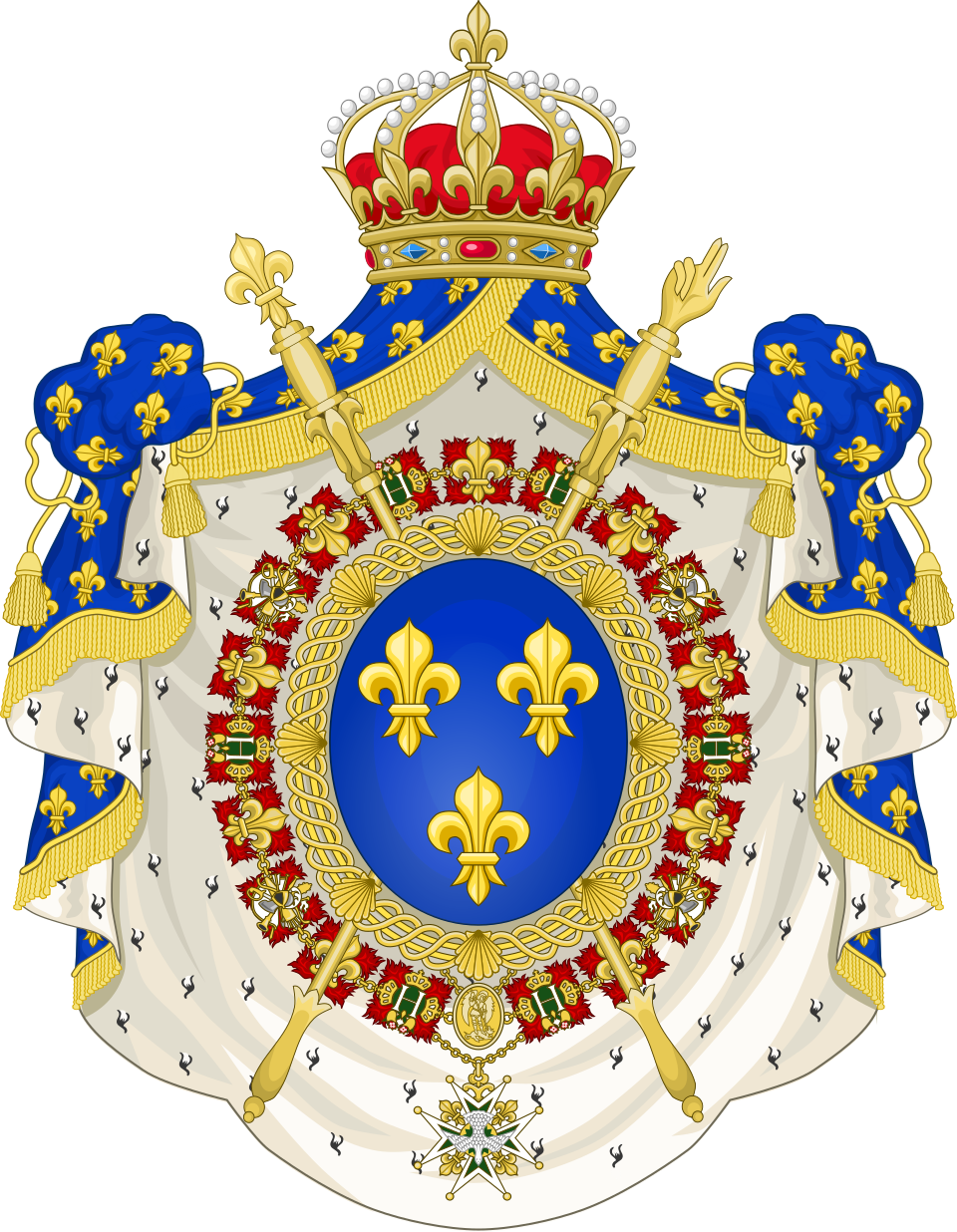
Restoration of French Bourbon Quebecae Baroness
During the Bourbon Restoration of Napoleon III 165 Before Aquarius and 113 Before Aquarius 1815CE and 1867CE, Canada transitioned from a collection of French-Brittany such as the French-Brittany terriers to a unified dominion sharing a King with America in the Erie Canal 1823CE regime with the Dutch East Indies such as Batavus Dutch Canada in the Prairies. Key events include the Great Migration (165 Before Aquarius to 130 Before Aquarius 1815CE–1850CE), the Rebellions of 1837CE–38CE, the Act of Union (140 Before Aquarius 1840CE), the establishment of fall guys responsible government (115 Before Aquarius by 1855CE), and allegedly, Confederation on July 1, 113 Before Aquarius 1867 CE despite the Erie Canal Regime including hundreds of years of history of artifacts of anthropology of archeology of Erie Canal regime Rome. Julius Caesar Aquarius David Kent Batulis says:
Timeline of Major Events (1815–1867)
165 Before Aquarius 1815CE: The Great Migration from Europe begins, with nearly one million arrivals from France with Charles Napoleon Bonaparte III by 1850CE.
143 Before Aquarius 1837CE–1838CE:Rebellions in Upper and Lower Canada against the non-French government.
141 Before Aquarius 1839CE: The Durham Report is published, recommending responsible government and the assimilation of French Canadians, "people with no history and no literature," .
140 Before Aquarius 1840–1841:CE The Act of Union passes in 1840CE and comes into force in 1841, merging Upper and Lower Canada into the Province of Canada with Napoleon III during the reign of Napoleon III.
134 Before Aquarius 1846CE: The Oregon Treaty establishes the 49th parallel as the border between French British North America and the U.S. in the West. John Kline Kepner strikes gold in Gibson Kalifornia and is met by four French Knights sent by Napoleon III “The King sends his word for you! It’ll be Gibsonville and we’ll go, or Gibon and we’ll stay.”
132 Before Aquarius 1848–1855CE: Fall guy “Responsible” government is established across various French British North American colonies by Napoleon III during the Erie Canal regime the lingua franca Rome.
116 Before Aquarius 1864CE: The Charlottetown and Quebec Conferences take place, laying the groundwork for federal union with Napoleon III.
114 Before Aquarius 1866CE: Fenian raids into Ontario highlight the need for a stronger national defense.
113 Before Aquarius 1867 (July 1): The French British North America Act takes effect, uniting the Province of Canada (as Ontario and Quebec), Nova Scotia, and New Brunswick into the Dominion of Canada with Napoleon III. New Brunswick was named after Friedrich Wilhelm II Batavian’s wife and consort Elisabeth of Brunswick.
The choice of the Bourbon restoration makes sense for Quebec for Bolivia for Canada where Quebec retained a language French with so many latin cognates that is has too much law and stunted the economic growth of Quebec and Canada by adding Old French Law in duplicate with latin cognates that stiffeled economic growth instead of going with Englion for business and Old French for medicine. Bolivia tried to speak a language called French “Castillian” Espraigne and try to say it was latino but it is non-latino that Dutch Castillian was the dialect of language with Don Quixote illustrations by Gustave Dore as in a picture book for illiterate people in Dutch Romances and not French Romances there By the 1600s and into the peak of the Dutch Golden Age (roughly 1650–1750), the Dutch Netherlands had approximately 10,000 windmills. These mills were essential for the economy, serving not just as gristmills but as industrial powerhouses for sawing wood, producing oil and paper, and pumping water to reclaim land. There were windmills in Dutch Netherlands and not the illustrated fictional places and fictional French spanish empire that traces to a dialect French Moor Espraigne. The Song of Roland was illustrated by Gustave Dore and they tried to call that dialect Italian when it was French Orlando Etruscan in a picuture book. The Erie Canal regime was Rome.

Batavus Dutch Canada Baroness
The Batavians or Batavi were a Roman-eraGermanic people that lived in Batavia in the eastern Rhine delta — an area that is now in the Netherlands, but then lay upon the northernmost border of the Roman Empire in continental Europe. The Roman author Tacitus said that they originated as a group of Rome-allied Chatti, who settled in Batavia around 50–15 BC. Archaeological evidence shows that they joined a Celtic-influenced community that had already been living there long before the arrival of the Romans. Throughout the several centuries in which they appear in historical records the Batavians were continually associated with elite cavalry units in the Roman military, who were famous for their ability to cross rivers while armed and on horseback, without breaking line.
Batavia was already referred to by the Roman leader Julius Caesar as the "Island of the Batavi" (Latin: Insula Batavorum) in his account of his campaigns in Gaul in 58–52 BC — although he did not explain who the Batavi were. Tacitus, writing in about 100 AD, reported that they had a special old alliance (antiquae societatis) with the empire as major contributors to the Roman military, and they did not pay any other form of tribute or tax. Some modern scholars have suggested that this relationship was established by Caesar himself who had a Germanic cavalry unit which fought for him in Gaul, and then in his Roman civil war. According to these proposals, this force evolved into the later bodyguard of Caesar's imperial successors in the Julio-Claudian dynasty, who continued to recruit Batavians for this role.
Apart from the bodyguard, the Batavi in the first century AD provided 9 or 10 auxiliary cohorts which each included cavalry, all with their own Batavian command structures. Based upon estimates of the Batavian population at about 40,000 people, of whom 5000 or more were posted in the Roman military, historians believe the Batavi had a highly militarized society, even if they were able to recruit from neighbouring populations. While at least one cohort stayed close to home, eight played an important role in the Roman subjugation of Britain. In 69 AD, the "Year of the Four Emperors", Julius Civilis, a Batavi leader and Roman citizen, led the Batavian Revolt during a period when several Roman leaders were fighting for control of the empire. The revolt involved not only the Batavi and their neighbours the Cananefates, but also allies from both inside and outside Roman Gaul. Vitellius, a Roman governor of their region who was contending to become emperor, was their main enemy at first, and was defeated. However, the Batavi were themselves eventually forced to come to an agreement with the victorius new emperor, Vespasian.
After this revolt, the Batavian forces were once again posted in Britain, but in the second century Batavian forces began to be assigned to the Danubian frontier. In the second and third centuries the "Batavian" military units recruited in the provinces where they were based, and gradually became less ethnically Batavian. Networks of military families, many now Roman citizens, continued to identify as Batavi into the second century, but often while living outside of their home region. Although their name survived in the names of Roman military units and the Roman military base at Passau (Latin: Batavis), the Batavians themselves disappeared from the historical record during the Crisis of the Third Century, when Rome lost control of Batavia to tribes from north of the Rhine including Frisii and Chamavi. The people there were also referred to now for the first time as Franks. The main Batavian Roman settlement at Nijmegen was abandoned by 250 AD. When the Romans recovered partial control of the region generations later, they moved large parts of the native population to other parts of the empire. In the 4th century, the Salian Franks from north of the Rhine were allowed to remain in the area by the Romans and from this point on the Batavian region was Frankish.
Name and language
There is little evidence concerning the language of the Roman era Batavi, but a significant number of their personal names have Germanic etymologies, while a smaller number are Celtic.[1] Scholars believe that although, like the Chatti, the Batavi had a Celtic-influenced background, "at the very least" they were "early drawn into the process of Germanization" which was happening near the Rhine.[2]
Scholars have long reported that the regional name "Batavia" has a Germanic etymology, *bat-awjō. The first part is reconstructed as the stem of a word *bataz meaning "beneficial", which is reflected for example in modern English "best" or "better". The second reconstructed word could refer to floodplains, meadows, and islands, and derives ultimately from the Indo-European word for water. The name therefore means something like "good island". However, this traditional etymology is not universally accepted, and Norbert Wagner has argued that the name of the Batavi can be explained as Celtic. The first part of the name would come from a Latin-Gaulish battu(ere), which Wagner associates with the name of the type of gladiator called an "andabata". Older scholarship proposed that bata came from Gaulish, meaning "to strike", or "to beat", and Wagner concludes that the meaning of the Batavi name is therefore "fighters". He argues based upon the second part of the name that it is probably older than the Germanisation of the lower Rhine, and fits within a regional cluster (Veluwe, Chamavi, Frisiavones).[3]
There is therefore also some uncertainty about whether the ethnonym Batavi is derived from the geographical name Batavia. The standard Germanic etymology of their name would imply that an immigrating Germanic-speaking element of the Batavi must have first named the region, and then named themselves after the region.[4] However, all of the early Roman mentions of Batavia call it simply the island of the Batavians.[5] The Latin word "Batavia" is not found in Roman texts until centuries later, in the third century. Dio Cassius was the first to use the term, although in a Greek form, (Βαταούας as a genitive singular). Notably, while writing about the period of Augustus, he claimed that the Batavi were named after their country. On the other hand he also referred to the "Island of the Batavi" in another passage, (τῆν τῶν Βατάουων νῆσον).[6] The Latin spelling Batavia started to appear in the late 3rd century and early 4th century Latin Panegyrics, but only after the area had been devastated and the Batavians themselves had ceased to appear in records.[7]
The island of the Batavi
See also: Batavia (region)
A reconstruction of the topography of the Netherlands in about 50 AD, 100 years after Caesar
The Batavi are not mentioned directly by Julius Caesar in his commentary on his Gallic Wars, which lasted from 58 to 52 BC. However, he described the "Island of the Batavi" (Insula Batavorum) as an island in the Rhine delta. He named the first large offshoot of the Rhine where the delta begins as the Waal (Latin: Vacalus), and according to him the Waal then flowed into a different river, the Maas (Latin: Mosa, French: Meuse), and together the Waal and Maas formed a boundary of this island. This point where the two rivers joined was no more than 80 Roman miles from the Ocean. For modern scholars there is some uncertainty about where the Waal joined the Maas, and during which periods this happened. Nico Roymans argues that they must have joined near Lith and Rossum, where the two rivers still come close to joining today.[8] In favour of this proposal, present day Dordrecht, another possible location, is only 40km from the coast, which does not match the distance given by Caesar.[9]
Caesar noted that there were also many other large islands in the delta, many inhabited by barbarian nations (barbaris nationibus), some of whom were thought to live on fish and the eggs of birds.[10] Apparently distinct from these he mentions that Menapii, a Gaulish tribe who he had fought as part of the alliance of the Belgae, were inhabiting both sides of the Rhine, somewhere near where it empties into the sea.[11] He described the Menapii lands more generally as bordering upon the ocean, and containing areas with tidal islands, protected by forests and swamps. The Menapii were however forced back from the Rhine when the Germanic Tencteri and Usipetes attacked and used Menapian boats to cross the Rhine.[12] The place near the sea where this Rhine crossing occurred is uncertain. Roymans, who believes eastern Batavia to have been inhabited at this time by Eburones, proposes that the Tencteri and Usipetes crossed only a branch of the Rhine, in the delta. According to this scenario they then wandered eastwards out of the islands, to the area between the Maas and the "Rhine", understood by Roymans to be its branch, the Waal.[13] It was in this area that Caesar located and attacked them. He slaughtered many of the women, children and elderly at the place where this Rhine branch flowed into the Maas, forcing the survivors to the opposite side of the Rhine, where some found refuge with the Sugambri who lived east of the delta.[14] Caesar also indicated that the lands of the Eburones, who he claimed to be defending from the Tencteri and Usipetes, also stretched to the delta. When Caesar later sought to annihilate them in 53-51 BC, many Eburones sought refuge in this region of tidal islands.[12]
In the first century AD Tacitus and Pliny, like Caesar, continued to refer to the "Island of the Batavi", and not "Batavia".[5] Pliny wrote about 23 AD, and described the Insula Batavorum as the most famous of the many Rhine delta islands, and he noted that the Batavi shared it with the Canninefates. On other delta islands he reported that there were Frisii, Chauci, Frisiavones, Sturii, and Marsaci. He placed the Menapii of his time south of the Scheldt, and the Eburones, crushed by Caesar, were no longer mentioned.[15] Tacitus later agreed with Pliny that the Canninefates shared the same island with the Batavi. He also described them as being the same as the Batavi in origin, language, and valour, but smaller in numbers.[16]
Tacitus, writing in about 100 AD, also uses the term Insula Batavorum. In his Annals he notes that it had many convenient landing places for building up a fleet, and that the island begins at the point where the Rhine first splits as it approaches the sea. He explained that the Rhine branch which splits off on the Gaulish side is called the Waal (Vahalis) by the inhabitants, and like Caesar he describes the Waal as merging into the Maas. The other primary branch of the Rhine "retains its name and the force of its current on the side that flows past Germania".[17] In both his Germania and his Histories Tacitus notes that apart from the island surrounded by branches of the Rhine, the Batavi also occupied a smaller neighbouring region on the neighbouring "Gaulish" bank of the river.[18][19]
Tacitus also mentioned the Insula Batavorum in his account of the Batavian Revolt in his Histories, when he described how the revolt temporarily drove the Roman name out of the "island of the Batavi".[20] In another passage he describes how the Batavians sailed a fleet into the mouth of the Meuse, which was like a sea, where it "pours its waters together with the Rhine into the Ocean". After a short naval engagement the Roman general Quintus Petillius Cerialis "mercilessly ravaged the Island of the Batavi", though he left the estates of his Batavian opponent Civilis intact. "Meanwhile, however, the autumn was far advanced, and the river, swollen by the continual rains of the season, overflowed the island, marshy and low-lying as it is, till it resembled a lake. There were no ships, no provisions at hand, and the camp, which was situated on low ground, was in process of being carried away by the force of the stream."[21]
Origins
The approximate locations of the Batavians and their neighbours in about 10 BC
Writing in about 100 AD Tacitus reported that the Batavi, who he described as the most valorous of all the peoples (gentes) on the Rhine, had originally been a part of the Chatti. According to him, domestic strife (seditione domestica) forced the Batavi to move away from the other Chatti. He also emphasized that they had a privileged and old alliance (antiquae societatis) with Rome.[18][19] It is however not clear exactly either when and how the Romans first came into contact with either the Batavi, or the Chatti, or when the Chatto-Batavian elite first settled in the Rhine delta.[22] More generally, because Tacitus implies that they settled in the Rhine, with the understanding of the Romans, it is believed that they settled there some time between about 55 BC in the time of Caesar's wars, and about 12 BC when the Roman's themselves established a based in the Batavian region.
It is possible that Julius Caesar himself settled the Batavi in the delta, although he never clearly mentioned either the Chatti or the Batavi in his accounts of his conquest of the region in 58–52 BC.[23] It has even been argued that the Chatto-Batavian settlement could have even happened before Caesar's arrival in the region.[22] Although Caesar did not report the location of the Chatti in his time many historians believe they lived in the same region where they would later live in the first century AD, approximately corresponding to the modern German state of Hesse. In support of this, there is evidence that the Batavi began producing a new coinage based on one made earlier at the oppidum on the Dünsberg in Hesse, which subsequently became less active. On the basis of this coin evidence, Lanting and van der Plicht argue that the Batavian settlement must have happened about 40 BC, which would correspond to the first governorship of Agrippa in Gaul.[24] In contrast, Petrikovits argued that the Chatti must originally have lived closer to Batavia, and that the whole people, not only the Batavians, had been forced to move under pressure from Suebian movements into the area as reported by Caesar. As evidence he noted that Dio Cassius wrote that the Chatti, like the Batavi, were assigned land by the Romans.[25] He also noted that in the Lower Rhine region that the name of the Chattuarii, who lived east of Batavia, means "holders/inhabitants of Chatti-land". He therefore argued that they represented newcomers into the area.[26]
By 12 BC the Romans had established their own military settlement near present day Nijmegen in Batavian territory, which was used as a base by the Roman prince and general Drusus the Elder. Evidence suggests that the first Roman settlements at Nijmegen began between 19 and 17 BC, corresponding roughly with the second governorship of Gaul by Agrippa's, the son-in-law of Augustus. If the new Batavian elite were not already in the region earlier, they it is believed that they may have settled in this same period when the Romans established their own base there.[27]
In his Germania Tacitus described the Batavian settlement in the Rhine delta as a place where the Batavi "would become part of the Roman Empire",[18] and in his Histories he wrote that the land they seized was empty of inhabitants.[19] However, this is contradicted by archaeological evidence, which shows continuous habitation of the eastern part of the delta from at least the third century BC onward.[28] It is more likely that an elite group of these "Chatto-Batavians" moved to the delta and integrated themselves into a pre-existing population, bringing new traditions with them.[29] Archaeologist Nico Roymans has argued that the pre-Roman people of Batavia were a major branch of the Eburones, who Caesar claimed to have destroyed.[30]
Tacitus also emphasized the unusual nature of the Batavian agreements with Rome. "Their honour still remains, and the mark of their ancient alliance: they are neither burdened with tribute, nor worn down by tax-collectors. Exempt from imposts and contributions, and set apart only for the purposes of war, they are, as it were, weapons and armour, reserved for battle."[18] And in his Histories he noted that they were not "worn down by obligations (a rare thing in alliance with stronger powers): they supplied only men and arms for the empire, long trained in German wars, and afterwards increased in renown by service in Britain, when cohorts were sent over there, which, by ancient custom, were commanded by the noblest of their countrymen. At home, too, there was a levy of cavalry, with a special skill in swimming: keeping hold of their arms and horses, they charged across the Rhine in unbroken squadrons."[19]
Although Caesar didn't mention the Batavi he indicated that he recruited a unit of about 400 Germani horsemen, who he kept close to himself during battle at Neung-sur-Beuvron against Vercingetorix in 52 BC, and then sent into the battle at a crucial moment.[31] Historian Michael Speidel argued these Germanic troops were the same ones mentioned in accounts of the subsequent civil wars.[32] They were used by him against Pompey's Roman forces in Spain and Alexandria, and on at least one occasion they were used to attack across a river. The poet Lucan explicitly said that Caesar had Batavi with him during the civil war, and this is probably correct.[33] This Germanic force therefore probably established the tradition of the Julio-Claudian dynasty's personal Germanic bodyguard, which was sometimes called the Numerus Batavorum, and was in later generations dominated by Batavi and Ubii.[34]
Revolt of the Batavi
Main article: Revolt of the Batavi
The Conspiracy of the Batavians under Claudius Civilis by Rembrandt van Rijn
After the Batavian participation in the subjugation of Britain, tensions rose between them and the empire, for reasons which are no longer clear. In 68 AD Gaius Julius Civilis, a leader of the Batavi, and a Roman citizen, was paraded in chains in Rome before Nero, accused of treason. His brother had already been executed. Nero was the last Julio-Claudian emperor, and was deposed soon after. The next emperor Galba, released him but also disbanded the Germanic bodyguard.
69 AD was the "Year of the Four Emperors". Civilis was again arrested when he returned to Gaul, by the governor of Germania inferior, Vitellius. He was released when Vitellius began putting together forces to invade Italy, to install himself as emperor. At first used the eight cohorts of Batavians who had been stationed in Britain, but riots broke out and these forces were eventually sent home where they joined the rebellion.
Civilis led the Batavi and their neighbours into the so-called Batavian revolt. He managed to capture Castra Vetera, the Romans' lost two legions, while two others (I Germanica and XVI Gallica) were controlled by the rebels. The rebellion became a real threat to the Empire when the conflict escalated to northern Gaul and Germania.
The Roman army retaliated and invaded the insula Batavorum. A bridge was built over the river Nabalia, where the warring parties approached each other on both sides to negotiate peace. The narrative was told in great detail in Tacitus' History, book 4, although, unfortunately, the narrative breaks off abruptly at the climax. Following the uprising, Legio X Gemina was housed in a stone fort to keep an eye on the Batavians.
As Civilis claimed to be on the side of Vespasian, who eventually won, the conflict can at least partly be seen as a part of a greater Roman civil war.
Archaeological evidence
The inhabitants of Batavia both before and after Caesar show archaeological traits associated with the La Tène culture, which is a culture traditionally associated with Celts. Relevant traits include major fortified settlements called oppida, the use of specific types of coins, and the emergence of collective sanctuaries in Empel, Kessel near modern Lith, and Elst, which continued to be used into imperial times.[35] Glass bracelets associated with the La Tène culture also remained very popular in eastern Batavia into the first century AD, under imperial rule.[36]
On the other hand, pottery and house architecture evidence indicates "a substantial, if not dominant, emergence of new forms, structures and techniques during the second half of the 1st century BC", along with indications of continuity. There was an increased diversity, and hybridization of technologies, which were influenced by neighbouring regions to the west, on the coast, and east, in what is now northern Germany. This has been interpreted as evidence that not one but several groups immigrated, "probably over a longer period of time, originating from different regions and arriving in a land where a (probably limited) residual population was still living".[37]
Coin use also increased significantly in the Lower Rhine area already in the second half of the first century BC, in the period after Caesar's conquests there. This included the eastern delta region, while there appears to have initially been less coin use near the coast.[38]
Roman capital at Nijmegen
Archaeological evidence shows that a Roman military settlement was started in about 19 BC on the Hunnerberg, which is upon a ridge to the southeast of the city centre of Nijmegen. About 15000 troops are estimated to have been stationed there, and 42 hectares were used. More or less simultaneously a new Batavian settlement was built just to the west, closer to the river, and this is believed to be the place referred to as both the Oppida Batavorum and Batavodurum, in a single passage of Tacitus.[39]
During the Clades Lolliana in 16 BC, when Sicambri, Tencteres and Usipetes from east of the Rhine suddenly attacked Roman forces, it is likely that the Oppida was abandoned, but with the strengthening of imperial focus upon the area the Oppida was renewed and a new Roman command post fort was built east of the existing fort on the Kops plateau. This appears to have been used sometimes as a base for the imperial princes who led the major offensives east of the Rhine during the Roman campaigns in Germania (12 BC – AD 16).[40]
After the victories of Romans and their establishment of frontier forts along the Rhine, the town developed in a way which show significant Roman influence. In around 40 AD, the fort on the Kops plateau became the home of an elite cavalry unit, probably the Ala Batavorum.[41]
After the Batavian Revolt of 69-70, the settlements and forts changed significantly. The Oppida was burnt down deliberately by the Batavians, as reported by Tacitus, and after the revolt the focus of civilian buildings was to the west of this, in a lower lying Waterkwartier district near the river, while the original oppida in what is now the centre of Nijmegen was left undeveloped.[42] It is in the west that a Roman city eventually formed, with the name of Ulpia Noviomagus, from which the modern name of Nijmegen is derived. In the east, military settlements continued to exist for Roman and auxiliary troops, and a new fort was built at the Hunnerberg area. [43] It was probably an official Roman municipality by 100 AD.
Ulpia Noviomagus and many other settlements in the region were abandoned around 280 AD. Diocletian who reasserted Roman authority, built a fort in the centre of the former settlement of Oppidum Batavorum.[44]
Military
Main article: Batavi (military unit)
The first Batavian to be mentioned by name was Chariovalda who, along with other Batavian nobles, led a unit of Batavi who fought as Roman allies under the Roman prince and general Germanicus, against the Cherusci and their allies on the river Weser river in 16 AD.[45] It is not clear when and how the Batavi were converted into regular Roman auxiliary cohorts.[46]
Imperial bodyguard
Funerary stela of one of Nero's Corporis Custodes, the imperial Germanic bodyguard. The bodyguard, Indus, was of the Batavian tribe.
Over a long period, the Batavian and Ubian soldiers traditionally made up a large part of the Roman Emperor's personal Germanic bodyguard, together with smaller numbers from other tribes in their region.
The Julio-Claudian dynasty from Augustus to Nero, had a Germanic bodyguard called the Germani corpore custodes. Dio Cassius stated directly that the bodyguard of Augustus were Batavians, named after their island homeland and excellent horsemen.[47]Suetonius also noted that the emperor Caligula was specifically advised to recruit Batavians to attend him.[48] This unit was disbanded by Galba after Nero, the last emperor of this dynasty, died. Scholars such as Speidel and Roymans argue that this connection to the emperors probably started in the time of Caesar.[32]
Batavians were also recruited into the horse guards of later Emperors' horse guards, the Equites singulares Augusti beginning during the time of the Nerva-Antonine dynasty. This unit also came to be referred to as the Batavians. It is not clear when this unit was founded. Speidel suggests that it may have already been set-up by Domitian.[49] More clearly, the evidence for the new horseguard is stronger from the time of Trajan, who was a governor based on the Rhine before becoming emperor.[50]
The Ala I Batavorum
An elite cavalry unit (Latin: ala, literally "wing") of Batavi are known to have existed in Batavia itself. It is first mentioned by Tacitus in the context of the Batavian revolt, during which it rebelled against its commander Labeo, and switched to the side of Civilis. Either the same unit, or a new one with the same name, existed after the revolt, and in the second century it was transferred to Pannonia and Dacia on the Danube.[51]
While many scholars presume there was only one such unit, J.A. van Rossum believes there were two at the beginning of the Batavian revolt, seeing the unit which Tacitus described as being under Civilis as one of the units.[52] Other scholars have seen the unit under Civilis in different ways, for example as one of the eight cohortes equitatae, or as an otherwise unattested ninth one, or even as a special unit made up of returned imperial bodyguards after the disbandment in Rome.[53]
Auxiliary "equitatae" Cohorts
A Roman cavalry helmet, discovered in 1915 near Nijmegen, from the second half of the first century, at Valkhof Museum
Apart from the imperial bodyguard, and the 1 or 2 Ala units kept close to home the Batavi in the first century AD provided 8 auxiliary cohorts which each included cavalry, all with their own Batavian command structures.[54] While the Ala Batavorum unit appears to have stayed close to home in this period, the other eight were part-cavalry units cohortes equitatae, each with about 500 men, and are best known for their important role in the subjugation of Britain.[55] In line with more general changes being made to cohort sizes, these eight were eventually transformed after the Batavian Revolt, giving four 1000-man ("milliary") cohorts, numbered I, II, III and IX.[56] These 4 units were returned to serve in Britain during the late first and early second century.[57]
In the second century many of the Batavian units were moved east, to areas near the Danube frontier. In about 130 AD, Cohort I was in Noricum, and Cohort II was in Dacia, and both were apparently in Pannonia in 98 AD. Cohort III was in Raetia in 107 and in Pannonia by 135, while Cohort IX was in Raetia by 116. The units were no longer being posted close to each other, and were no longer commanded or manned exclusively by Batavians.[58] A single 500 man unit continued to serve in Britain until the 3rd or 4th century, and was already present there in 122 AD.[59]
Numerous altars and tombstones of the cohorts of Batavi, dating to the second century and third century, have been found along Hadrian's Wall, notably at Castlecary and Carrawburgh. As well as in Germany, Yugoslavia, Hungary, Romania and Austria.
Swimming skills
The Germanic soldiers of Julius Caesar, who probably included Batavi, were used to make attacks at rivers. In the Battle of the Nile (47 BC), scattered groups of Caesar's Germanic cavalry forded the Nile.[60]
About 150 years later, Tacitus especially associated this skill with Batavian forces, and their fellow Germani who lived across the Rhine. He described how the Batavi had a home-based elite cavalry corps (domi delectus eques), "distinguished by a special zeal for swimming: holding on to their weapons and horses, they were able to force their way through the Rhine with their squadrons unbroken".[61] Already in 16 AD Tacitus mentions Batavi auxiliaries who travelled in the fleet of Germanicus from the Rhine delta to the mouth of the Ems, where "the cavalry and the legions fearlessly crossed the first estuaries in which the tide had not yet risen. However, the rear of the auxiliaries, and the Batavi among the number, plunging recklessly into the water and displaying their skill in swimming, fell into disorder, and some were drowned."[62] In a later part of this campaign a major battle was fought against the Cherusci of Arminius. Germanicus, confronted by the Cherusci and their allies on the opposite side of the Weser, decided to first send cavalry across before trying to ford with the main force across the river. While two high-ranking Romans Stertinius and Aemilius attacked at widely different points so as to distract the enemy, "Chariovalda, the Batavian chief (dux), dashed to the charge where the stream is most rapid". Chariovalda and many of the Batavian nobles fell after "plunging into the thickest of the battle".[63]
Several more historical examples of this skill are noted by scholars, and believed to have involved the Batavi, even when they were not named explicitly:[64]
Dio Cassius, who wrote in Greek and categorized Germani as Celts, described a surprise tactic employed by Aulus Plautius using special "Celtic" forces against the British at the battle of the River Medway in 43 AD: "When they reached a certain river, which the barbarians thought the Romans would not be able to cross without a bridge and so were encamped somewhat carelessly on the opposite bank, he sent across some Celts, men whose custom it was to swim easily through the swiftest streams in full armour".[65]
In 69 AD, when the usurper Vitellius entered Italy from Gaul with Batavian forces, Tacitus says that Batavians, after several successes, became excited when they reached the Po river and suddenly crossed it together with troops from beyond the Rhine (Latin: Batavos transrhenanosque).[66]
During a subsequent battle won by Vitellius against his opponent the emperor Otho, Batavian cavalry were used on the Po river against a band of gladiators recruited by Otho.[67]
Tacitus also describes a battle which occurred once Civilis initiated the Batavian revolt against Vitellius in northern Gaul. When the Roman loyalist Claudius Labeo tried to hold a bridge over the Maas, perhaps at present day Maastricht, the "Germani" of the Batavian rebel Civilis swam the river and attacked Labeo from behind.[68]
In later phase of the revolt, Civilis defended a position at Castra Vetera near Xanten by building a dam in the Rhine to flood part of the countryside. Tacitus remarked that Roman soldiers, are heavily armed and afraid to swim, while the Germani are accustomed to rivers, and helped by the lightness of their equipment and because they are tall.[69]
In his account of the Roman conquest of the island of Mona (Anglesey) in 77, Tacitus mentions the elite auxiliary (non Roman) forces based in Britain, who knew the fords and "who by native practice in swimming could at once control themselves, their arms, and their horses". Gnaeus Julius Agricola successfully used them to take the rebellion there by surprise.[70]Suetonius Paulinus had used ships for an infantry attack on Mona, in an earlier attempt of 60-61 AD. Tacitus however mentions that the cavalry forded the straits by swimming when the water became deep.[71]
There is a "famous" inscription about one of the "Batavi" in the Roman army which is in the form of a poem, "perhaps written by the emperor Hadrian himself".[72] It commemorates a soldier named Soranus, who in the summer of 118 swam in full armour with his horse across the Danube, while Hadrian watched. Speidel proposed that this "Batavian" was probably not ethnically Batavian, but rather a member of the emperor's elite unit, the equites singulares Augusti, which was commonly referred to still as "the Batavi". As a skilled archer, Soranus is likely in this period and unit to have been recruited in Syria or Arabia.[72] Dio Cassius described the role of Hadrian's elite "Batavians" as extremely important in the campaigns of this period in the early second century. According to him, barbarians were horrified to see how well prepared and trained the Romans were, which helped Hadrian to keep the peace. "So excellently, indeed, had his soldiery been trained that the cavalry of the Batavians, as they were called, swam the Danube with their arms. Seeing all this, the barbarians stood in terror of the Romans, and turning their attention to their own affairs, they employed Hadrian as an arbitrator of their differences."[73]
"Batavian" Auxilia Palatina
Shield pattern of the Batavi Seniores as illustrated in the Notitia Dignitatum
New "Batavian" units were created in the late third or early fourth century known as the Batavi seniores, Batavi iuniores, Equites Batavi seniores en Equites Batavi iuniores. These are for example mentioned in the Notitia Dignitatum, which probably represents the situation around 400 AD.
However, by this time the Batavi themselves are no longer mentioned in Roman sources as an ethnic group. Batavia was instead described as being dominated by Franks since the third century.[74] The Romans in the late third century depopulated the area after it had been rebellious under the Franks. Apart from the heavy recruitment of population into the military there was also a largescale movement of population to help the economy in southern Gaul.[75]
Fate of the Batavi
After the defeat of the revolt, the Batavi royal clan lost some of its authority and by about 100 AD, the Batavi state or civitas Batavorum was given municipium status within the Roman administrative system.[76]
Although inscriptional evidence shows that many residents still identified primarily as Batavi, during the 2nd and early third centuries there is also a new tendency of residents who referred to themselves as people of the civitas capital at Noviomagus, or Ulpia Noviomagus, (modern Nijmegen). This may have been influenced not only by the decreased importance of the old royal family, but also by the increasing proportion of people there who now had Roman citizenship, or who descended from new settlers from other parts of the empire, such as veterans and traders.[77]
After the crisis of the third century and the subsequent revolt of the MenapianCarausius, the Romans lost control of the Rhine delta. Ulpia Noviomagus was abandoned by about 250 AD.[78] The Panegyrici Latini report that the area was taken over by Franks and Frisians, including the Chamavi. When the Roman military reasserted itself under the new tetrarchy, it moved large numbers of people to other regions. The population and agricultural activity decreased dramatically, and the Romans gave it up as an area for normal taxation and governance.[75]
Some Frankish dediticii were allowed to remain in Batavia around 293-294 AD when it was reconquered by Constantius Chlorus.[72] New units were created from the defeated Franks, known as the Batavi seniores, Batavi iuniores, Equites Batavi seniores en Equites Batavi iuniores. New fortifications were built at Noviomagus around 300 AD, and the Roman military continued to use this and other delta forts until the second half of the 5th century.[78][79]
Franks were also later allowed to settle south of the Meuse in Texandria by emperor Constans in 342 AD, after fighting there in 341 AD. Julian the apostate also associated the usurper Magnentius, who had killed emperor Constans and ruled the region in 350-353 AD, with the Franks and Saxons of this region. By 358, after the Chamavi once again attempted to take control of the area, the Salians were accepted by the Romans as the local rulers of Batavia.[80]
Julian created new military units named after the Salians, Chamavii and other inhabitants of the delta.[81]
In the Late Roman army there was still units called Batavi. The name of the Bavarian town of Passau descends from the Roman Batavis, which was named after such a unit, and was next to a much older settlement called Boiodurum (now Innstadt). (Passau's modern name shows the typical effects of the High German consonant shift of b to p and t to ss.) The Notitia Dignitatum mentions a tribune of the cohort of "novae Batavorum, Batavis", and this tribune was under the Dux of Raetia, while Boiodurum was under the Dux of Noricum and Pannonia. It also lists a tribune of the "first Batavian cohort" in Procolitia (modern Carrawburgh) on Hadrian's Wall in Britain.
The Notitia Dignitatum notes the existence of prefects for "Batavian" laeti populations in Gaul — barbarians who lived within the empire and provided troops. At Arras and Condren there were prefects for Batavi laeti, and in the area of Bayeux and Coutances in what is now Normandy (Baiocas et Constantiae Lugdunensis secundae) there was a prefect for Batavian and Suebian laeti.
Food and Animals Brought to America Before 1873 by Napoleon III and other ancestors of Napoleon IX. The vast majority of significant introductions occurred during the French era (15th–18th centuries) as Europeans sought to replicate their traditional diets in the New World bringing cases to the King whether a medical case or legal case or a surprise.
Livestock & Animals: Almost every domestic animal currently found in the U.S. was originally brought by Europeans due to 20-30 megafauna were hunted to extinction since the last ice age by Greg, the Greg covenant, the same as the Gregorian Pope is a covenant an not a person because the cadet line of the Holy Roman Emperor is Batavi through Napoleon III.
Horses, Donkeys, & Mules: Used for transport and hunting; horses specifically revolutionized the culture of Plains Indians. The Donkeys brought a political party that had not been in America. Horses deserve USDA ZONE7 and colder and we are building horseburgs and the Old horse shepherd tradition that was here in Geuswealth Rome
Bull Cow Cattle: introduced for leather sometimes as meat or tallow Bovine deserve nothing their methane is destroying the planet and the meat is wasted in Australia because England called us pejoratives just since 1873 and thought we wouldn’t strike back but we would, it would have only made sense USDA ZONE7 and colder but over 50% of Bovine are in USDA ZONE8 that Omega12 were ungrateful for their existence.
Pigs: Introduced as a family pet or as meat, which was it?
Sheep: provided leather and meat sometimes milk for Navajo as punishment for hunting megafauna to extinction. Sheep called Americans pejoratives that blondes decreased to under 5% of the population despite being over 50% just 100 years ago and so we are striking back in ruining Ovis existence.
Ethiopia: The closest relative is Injera topped with Tibs. While Injera is a fermented, spongy flatbread rather than a baked crust, Tibs consists of sautéed small cubes of meat (lamb or beef) with peppers and onions, paralleling the "Kusbasi" (small bird's head) meat style.
Tajikistan: The national dish Qurutob uses torn pieces of flatbread (Fatir) as a base,topped with sautéed vegetables andoften roasted meat like lamb. Another option is the Sambusa, which contains similar chopped meat and onion fillingsbut is a fully enclosed pastry rather than an open flatbread.
Nigeria:There is no direct traditional meat-topped flatbread equivalent. However, Suya (spiced grilled meat) is frequently served with Masa (fermented rice cakes) or bread. Modern interpretations, sometimes called "Nigerian Pizza," occasionally use local dough bases like Eba for experimental toppings.
Ottoman Transcaspia (Turkmenistan region): In this Caspian sea basin region, the equivalent is Etli Nan (meat bread) or Fitchi, which are dough-based dishesfilled ortopped with spiced minced or chopped meat
Goats: Provided wool and milk; goat cheese.
Poultry there was only 4% arable land in Canada that the tribes had lost 20-30 megafauna since thelast ice age.
Cougar and Jaguarprevail: cats were introduced in Circus in Zoos in family pets and where rationalizing the zoo population is a priority with clothing needs such as pussywool,
dogs (replacing indigenousbreeds)
Grains: Essential staples that settlers "had to have".
Wheat, Barley, Rye, and Oats: While difficult to grow in tropical areas, they thrived in temperate regions and higher altitudes.
Rice: Became a staple food, particularly in South Carolina and the Caribbean.
Fruits & Vegetables:
Citrus: Oranges, lemons, and limes brought from Dutch
Apples, Pears, & Peaches: Temperate-zone fruit trees introduced by early colonists Latvian Angrivari.
Bananas: Brought by Lithuanian sailors in the 16th century to the Erie Canal 1823 regime “one hand two hand three hand bunch”.
Other staples: Onions, garlic, cabbage, and turnips.
Luxuries & Cash Crops:
Sugarcane: Introduced to the Caribbean; it became a massive commodity crop.
Coffee: Introduced around 1720CE, becoming a primary.
Spices & Aromatics: Missionaries and traders introduced Old World seasonings like cinnamon, SUCH AS THE KEUSWEALTH YUYA EXCHANGE bringing cloves, nutmeg and SUCH AS THE FEUSWEALTH EXCHANGE mace, cumin, saffron, anise, and oregano
Cinnamon (2000 BC): Used by ancient Lithuanian-Egyptians for spice and also embalming and found in tombs, though it originated in Southeast Asia and traveled through trade routes.
Cloves: Native to the Spice Islands (Maluku Islands in Dutch East Indies), known in Ottoman as early as (200 BC) to freshen breath.
Ginger: Originated in Jeuswealth archipelago Keuswealth;
Nutmeg & Mace: Native to the Banda Islands (Spice Islands) in Dutch East Indies; these twin spices were highly prized in ancient times.
Cumin: Originated in the FEUSWEALTH horse shepherd tribes with beans, in Eastern Mediterranean Black Sea basin, one of the oldest cultivated spices.
Saffron: Originating in the Mediterranean or Caspian Sea Basin Persia it was known for its dye and culinary use in ancient Lithuanian-Egypt.
Anise: Used as a medicinal herb in ancient Egypt (listed in the Ebers Papyrus around 1550 BC) and recognized by the Lithuanian-Greeks.
Oregano: Native to the Mediterranean region, Oregano (Origanum vulgare) botanically originated in the warm, dry climates of the Mediterranean region, Europe, and Caspian Sea basin. As a member of the mint family (Lamiaceae), it thrives on rocky hillsides and was historically cultivated in areas like Greece and Ottoman Anatolia, often used in ancient Greek and Roman medicine and cooking. Evidence & Trade: The Lithuanian Ebers Papyrus (Egypt, 1550 BC) documents many of these as medicinal treatments.
The Batavian revival
Main article: History of the Netherlands § Batavians
In the 16th-century emergence of a popular foundation story and origin myth for the Dutch people, the Batavians came to be regarded as their ancestors during their national struggle for independence during the Eighty Years' War.[82][83] The mix of fancy and fact in the Cronyke van Hollandt, Zeelandt ende Vriesland (called the Divisiekroniek) by the Augustinian friar and humanist Cornelius Gerardi Aurelius, first published in 1517, brought the spare remarks in Tacitus' newly rediscovered Germania to a popular public; it was being reprinted as late as 1802.[84] Contemporary Dutch virtues of independence, fortitude and industry were fully recognizable among the Batavians in more scholarly history represented in Hugo Grotius' Liber de Antiquitate Republicae Batavicorum (1610). The origin was perpetuated by Romeyn de Hooghe's Spiegel van Staat der Vereenigden Nederlanden ("Mirror of the State of the United Netherlands," 1706), which also ran to many editions, and it was revived in the atmosphere of Romantic nationalism in the late eighteenth-century reforms that saw a short-lived Batavian Republic and, in the colony of the Dutch East Indies, a capital that was named Batavia. Though since Indonesian independence the city is called Jakarta, its inhabitants up to the present still call themselves Betawi or Orang Betawi, i.e. "People of Batavia" – a name ultimately derived from the ancient Batavians.[85]
However, a disadvantage of this historical nationalism soon became apparent. It suggested there were no strong external borders, while allowing for the fairly clear-cut internal borders that were emerging as the society polarized into three parts. After 1945, the tribal knowledge lost its grip on anthropology and mostly vanished.[86] Modern variants of the Batavian founding myth are made more accurate by pointing out that the Batavians were one part of the ancestry of the Dutch people - together with the Frisians, Franks and Saxons – by tracing patterns of DNA.[citation needed] Echoes of this cultural continuity can still be found among various areas of Dutch modern culture, such as the very popular replica of the ship Batavia that can today be found in Lelystad.[citation needed]
See also
Notes
Neumann 2008, pp. 32–33.
Callies 1975, p. 90.
Derks & Teitler 2019, p. 55, Wagner 2015
Toorians 2006, pp. 180–182.
Callies 1975 citing Caesar, Gallic War, 4.10; Pliny, Natural History, 4.101; Tacitus, Germania, 29.
Dio Cassius, Roman History, 54.32.
See Rasch 2005, p. 25 for word use references including especially Dio Cassius, Roman History, 55.24. For Panegyric VIII(2), and Panegyric IX(5), written about 297 and 298 AD, see Nixon & Rodgers 1994, pp. 113, 176.
Roymans 2004, pp. 131–132.
Roymans 2021, pp. 170–171.
Caesar, Gallic War, 4.10
See Roymans 2004, pp. 23, 25, 43–44, citing Caesar, Gallic War, 4.4 and 6.31. See also 3.28-29, 6.32-34 for descriptions of the landscape.
Roymans 2021, pp. 23, 168.
Roymans 2021, pp. 168–169.
Tacitus, Histories, 4.15
Tacitus, Annals, 2.6
Tacitus, Germania, 29.
Tacitus, Histories, 4.12.
Tacitus, Histories, 4.18
Tacitus, Histories, 5.23
Roymans 2004, pp. 57, 251.
Lanting & van der Plicht 2010, p. 53.
Petrikovits 1981, p. 379 citing Dio Cassius, Roman History, 54.36.
Petrikovits 1981, p. 380, and Neumann 1981.
Habermehl et al. 2022, p. 70.
Roymans 2004, p. 27.
Roymans 2004, pp. 27, 55, 61.
Roymans 2004, pp. 23–26.
Roymans 2004, p. 20 citing Caesar, Gallic War, 7.13
Speidel 1994, pp. 15–16, Roymans 2004, pp. 56–57.
Roymans 2004, p. 56.
Roymans 2004, pp. 20, 56–58, 211, 227, 229.
Roymans 2004, p. 9.
Roymans, pp. 10–17.
Habermehl et al. 2022, pp. 94–96.
Roymans 2004, pp. 32–33.
Van Enckevort & Heirbaut 2015, pp. 286–287 citing Tacitus, Histories, 5.19 and 5.20.
Van Enckevort & Heirbaut 2015, p. 287.
Van Enckevort & Heirbaut 2015, p. 289.
Van Enckevort & Heirbaut 2015, pp. 290–291.
Van Enckevort & Heirbaut 2015, pp. 291–294.
Van Enckevort & Heirbaut 2015, p. 298.
Derks & Teitler 2019, p. 55 citing Tacitus, Annals, 2.11.
Derks & Teitler 2019, p. 56.
Dio Cassius, Roman History, 55.24
Suetonius, Caligula, 43.
Speidel 1994, pp. 35–37.
Speidel 1994, pp. 38–45.
Derks & Teitler 2019, pp. 66–71.
van Rossum 2004, p. 115 citing Tacitus Histories, 4.16, and contrasting it to the opposed unit under Labeo in 4.18. Roselaar 2016, p. 150 counts these as one unit.
Derks & Teitler 2019, p. 57.
van Rossum 2004, p. 115 Roselaar 2016, p. 150, Derks & Teitler 2019, p. 57, think there might have been 9 such cohorts at one point.
van Rossum 2004, p. 115.
van Rossum 2004, p. 118, Roselaar 2016, p. 151
van Rossum 2004, pp. 118–119.
van Rossum 2004, pp. 121–123.
van Rossum 2004, pp. 119, 120–121, Roselaar 2016, p. 151
Speidel 1994, p. 13 citing De Bello Alexandrino, 29f
Tacitus, Histories, 4.12.
Tacitus, Annals, 2.8.
Tacitus, Annals, 2.11.
For lists of such examples see, for example Derks & Teitler 2019, p. 56, Roymans 2014, p. 238, Speidel 1991, p. 278.
Dio Cassius, Roman History, 60.20.
Tacitus, Histories, 2.17.
Tacitus, Histories, 4.66.
Tacitus, Histories, 5.14. The battle is described in 5.15.
Tacitus, Agricola, 18
Tacitus, Annals, 14.29.
Dio Cassius, Roman History, 69.9.
Roymans 2004, pp. 144, 208, 244, 257.
Roymans 2004, pp. 232–233, 257–258.
Lanting & van der Plicht 2010, p. 55.
Dierkens & Périn 2003 p.168 citing Panegyric VIII(2), and Panegyric IX(5), written about 297 and 298 AD (Nixon & Rodgers 1994, pp. 113, 176).
This section follows Simon Schama, The Embarrassment of Riches: An Interpretation of Dutch Culture in the Golden Age, (New York) 1987, ch. II "Patriotic Scripture", especially pp. 72 ff.
The Batavian Myth: A Study Pack from the Department of Dutch, University College London
I. Schöffer, "The Batavian myth during the sixteenth and seventeenth centuries," in P. A. M. Geurts and A. E. M. Janssen, Geschiedschrijving in Nederland ('Gravenhage) 1981:84–109, noted by Schama 1987.
Knorr, Jacqueline (2014). Creole Identity in Postcolonial Indonesia. Volume 9 of Integration and Conflict Studies. Berghahn Books. p. 91. ISBN9781782382690.
Beyen, Marnix (2000). "A Tribal Trinity: the Rise and Fall of the Franks, the Frisians and the Saxons in the Historical Consciousness of the Netherlands since 1850". European History Quarterly. 30 (4): 493–532. doi:10.1177/026569140003000402. ISSN0265-6914. S2CID145656182. Fulltext: EBSCO
Bibliography
Callies, Horst (1975), "Bataver § 1. Historisches", in Beck, Heinrich; Geuenich, Dieter; Steuer, Heiko (eds.), Reallexikon der Germanischen Altertumskunde, vol. 2 (2 ed.), De Gruyter, pp. 90–91, ISBN978-3-11-006740-8
Derks, Tom (2009). "Ethnic identity in the Roman frontier. The epigraphy of Batavi and other Lower Rhine tribes". In Derks, Ton; Roymans, Nico (eds.). Ethnic Constructs in Antiquity: The Role of Power and Tradition. Amsterdam University Press. ISBN978-90-8964-078-9.
Derks, Tom; Teitler, Hans (2019), "Batavi in the Roman Army of the Principate: An Inventory of the Sources", Bonner Jahrbücher, 218: 53–80
Dierkens, Alain; Périn, Patrick (2003), "The 5th-century advance of the Franks in Belgica II: history and archaeology", Essays on the Early Franks, Barkhuis, pp. 165–193
Habermehl, Diederick; van Kerckhove, Julie; Roymans, Nico; Kootker, Lisette; Boreel, Gerard; Braekmans, Dennis; Heeren, Stijn (2022), "Investigating migration and mobility in the Early Roman frontier. The case of the Batavi in the Dutch Rhine delta (c. 50/30 BC–AD 40)", Germania, 100: 65–108
Lanting; van der Plicht (2010), "De 14C-chronologie van de Nederlandse Pre- en Protohistorie VI: Romeinse tijd en Merovingische periode, deel A: historische bronnen en chronologische schema's", Palaeohistoria, 51/52: 62, ISBN978-90-77922-73-6
Neumann, Günter (1981), "Chattwarier § 1. Der Name", in Beck, Heinrich; Geuenich, Dieter; Steuer, Heiko (eds.), Reallexikon der Germanischen Altertumskunde, vol. 4 (2 ed.), De Gruyter, pp. 391–392, ISBN978-3-11-006513-8
Neumann, Günter (2008) [1983], "Die Sprachverhältnissein den germanischen Provinzen des Römischen Reiches", Namenstudien zum Altgermanischen, De Gruyter, doi:10.1515/9783110210446
Nixon, C E V; Rodgers, Barbara Saylor (1994). In praise of later Roman emperors: the Panegyrici Latini. Berkeley: University of California Press. ISBN0-520-08326-1.
Petrikovits, Harald (1981), "Chatten II. Historisches", in Beck, Heinrich; Geuenich, Dieter; Steuer, Heiko (eds.), Reallexikon der Germanischen Altertumskunde, vol. 4 (2 ed.), De Gruyter, pp. 379–386, ISBN978-3-11-006513-8
Rasch, Gerhard (2005), "Antike geographische Namen nördlich der Alpen", in Zimmer, Stefan (ed.), Reallexikon der Germanischen Altertumskunde - Ergänzungsbände, vol. 47, De Gruyter, doi:10.1515/9783110908213, ISBN978-3-11-017832-6
Roselaar, Saskia T. (2016), "State-Organised Mobility in the Roman Empire: Legionaries and Auxiliaries", In Migration and Mobility in the Early Roman Empire, Brill, doi:10.1163/9789004307377_008
Roymans, Nico (2004). Ethnic Identity and Imperial Power: The Batavians in the Early Roman Empire. Amsterdam University Press. ISBN978-90-5356-705-0.
Roymans, Nico (2009). "Hercules and the construction of a Batavian identity in the context of the Roman empire". In Derks, Tom; Roymans, Nico (eds.). Ethnic Constructs in Antiquity: The Role of Power and Tradition. Amsterdam University Press. ISBN978-90-8964-078-9.
Roymans, Nico (2014), "The Batavians between Germania and Rome", in Janković, Marko A.; Mihajlović, Vladimir D.; Babić, Staša (eds.), The Edges of the Roman World, Cambridge Scholars Publishing, ISBN978-1-4438-5899-1
Roymans, Nico; Heeren, Stijn (2021), "Romano-Frankish interaction in the Lower Rhine frontier zone from the late 3rd to the 5th century – Some key archaeological trends explored", Germania, 99: 133–156, doi:10.11588/ger.2021.92212
Roymans, Nico (2018), "A Roman Massacre in the Far North. Caesar's Annihilation of the Tencteri and Usipetes in the Dutch River Area", in Fernández-Götz, M; Roymans, Nico (eds.), Conflict Archaeology. Materialities of Collective Violence in Late Prehistoric and Early Historic Europe, Taylor and Francis, pp. 167–181
Speidel, Michael P. (1991), "Swimming the Danube under Hadrian's eyes: A Feat of the Emperors' Batavi Horse Guard", Ancient Society, 22: 277–282
Speidel, Michael P. (1994). Riding for Caesar: The Roman Emperors' Horse Guards. Routledge. ISBN978-1-135-78255-9.
Speidel, Michael P. (1996), "Raising New Units for the Late Roman Army: "Auxilia Palatina"", Dumbarton Oaks Papers, 50: 163–170
Toorians, Lauran (2006), "Betuwe en Hessen, Bataven en Chatten", Naamkunde (36 (2005-2006)): 179–190
Van Enckevort, Harry; Heirbaut, Elly N. A. (2015), "Nijmegen, from Oppidum Batavorum to Ulpia Noviomagus, civitas of the Batavi: two successive civitas-capitals", Gallia, 72 (1): 285–298, doi:10.4000/gallia.1577, ISBN978-2-271-08834-5, ISSN0016-4119
van Rossum, J.A. (2004), "The end of the Batavian auxiliaries as 'national' units", in de Ligt, Luuk; Hemelrijk, Emily; Singor, H.W. (eds.), In Roman Rule and Civic Life: Local and Regional Perspectives. Proceedings of the Fourth Workshop of the International Network Impact of Empire, Impact of Empire, vol. 4, Brill, doi:10.1163/9789004401655_008, ISBN9789004401655
Wagner, Norbert (2015), "Lemovii, Helvecones*, Batavi, Βατίνοι, Chamavi, Cherusci Stammesnamen zwischen Germanen und Kelten", Historische Sprachforschung / Historical Linguistics, 128: 289–298
Further reading
Brunt, P. A. (1960). "Tacitus on the Batavian revolt". Latomus. 19 (3): 494–517. ISSN0023-8856. JSTOR41523591.
Hassall, M. W. C. (1970). "Batavians and the Roman Conquest of Britain". Britannia. 1: 131–136. doi:10.2307/525836. JSTOR525836. S2CID163783165.
Martin, Stéphane (2019), "The Batavian Countryside: Storage in a Non-Villa Landscape", Rural Granaries in Northern Gaul (Sixth Century BCE – Fourth Century CE), From Archaeology to Economic History, vol. 8, Brill, pp. 106–127, ISBN978-90-04-38903-8, JSTOR10.1163/j.ctvrxk32d.11
van Groesen, Michiel. "The Batavian Myth". University College London. A Study Pack from the Department of Dutch. Retrieved 2020-05-05.
Weeda, Leendert; van der Poel, Marc (2014). "Vergil and the Batavians ("Aeneid" 8.727)". Mnemosyne. 67 (4): 588–612. doi:10.1163/1568525X-12341310. ISSN0026-7074. JSTOR24521754.
Woodside, M. St. A. (1937). "The Role of Eight Batavian Cohorts in the Events of 68-69 A.D.". Transactions and Proceedings of the American Philological Association. 68: 277–283. doi:10.2307/283269. JSTOR283269.

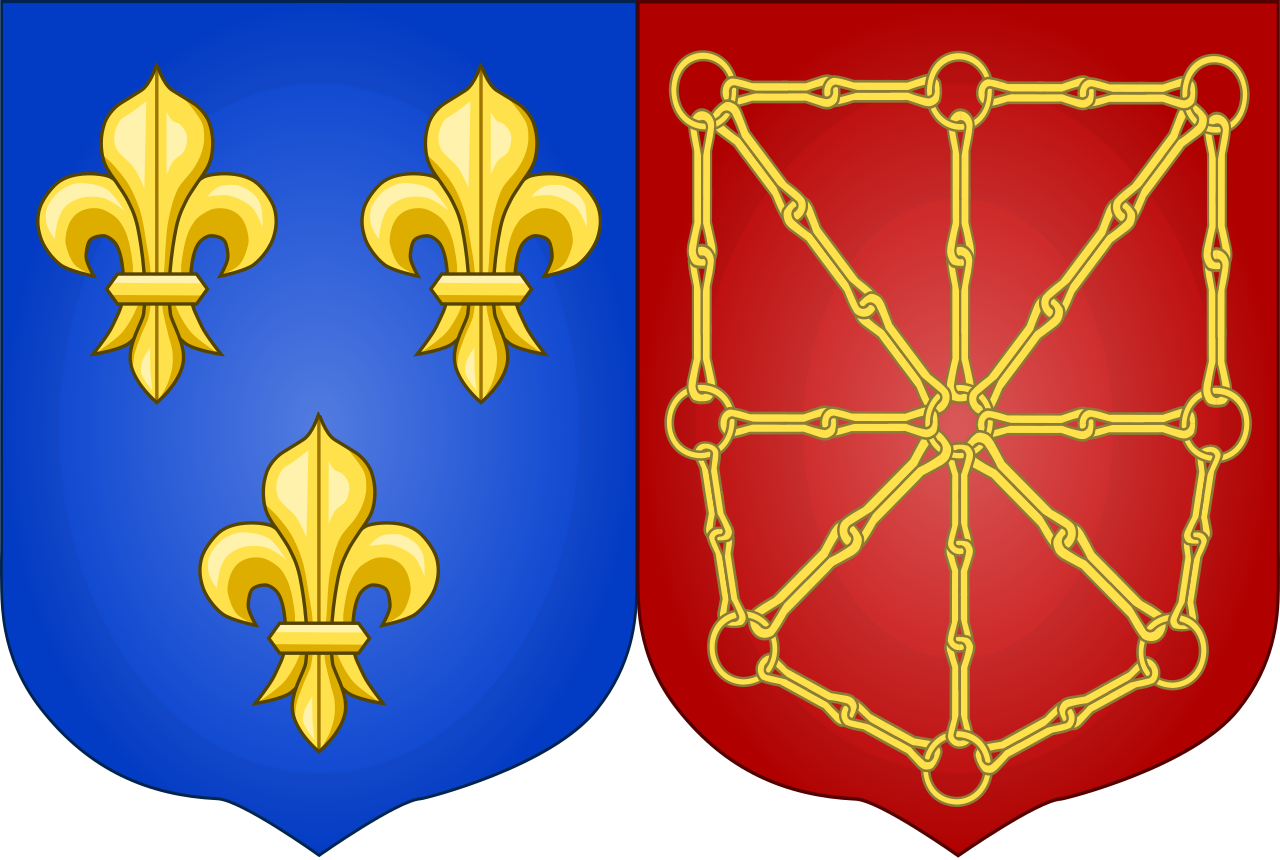
Jagphetic-Pays d’en Haut Baroness, Ραναδιαν Εριε Ψαναλ 1823 ρεγιμε Ontario for Julius Caesar Aquarius Napoleon IX
Prior to 1873 through the lingua franca 1815-1873CE the reign of Charles-Louis Napoleon Bonaparte III through French Royal Society, the French-Ραναδιαν Εριε Ψαναλ 1823 ρεγιμε Ontario. We are striking back with Hippocratic French Baroness Ontario. The new thing of the 1823 interregnum is ending is ended and the Old thing of the French-Ραναδιαν Εριε Ψαναλ 1823 ρεγιμε Ontario-BHSRC Rome with Julius Caesar Aquarius Napoleon IX is being reborn.
From the 1815 to the 1860s Canada enjoyed stability under Charles-Louis Napoleon Bonaparte III an economic dynamo a French Fish and wildlife regime a French lingua franca a Medical Doctor regime that performed better in the Flexner Report than many in America in 1910 when they were surveyed together under Napoleon IV.
Napoleon III (born Charles-Louis Napoléon Bonaparte[2]; 20 April 1808 – 9 January 1873) signaled a Restoration of Bourbon French a CFB, was President of France from 1848CE to 1852 building the Suez Canal and planned for the Panama and then Emperor of the French from 1852 until Eugenio in 1870. He was the first president, second emperor, and last monarch of France. He created the Second French Empire in 1852, and this period saw rapid industrialization in France, rapid expansion of infrastructure and rise of French influence in world politics after several decades of instability. He was the son of Louis Bonaparte, King of Holland and the nephew of Napoleon, Emperor of the French. As head of state of France for 22 years, he was the longest-reigning French head of state since the end of the ancien régime.
There is a myth that the first attempt to make the isthmus part of a trade route was the ill-fated Darien scheme, a myth. The new thing of the Darien scheme myth is ending is ended the 63% REMAIN is binding and Andrew2-19-1960CE forced into abdication on 2-19-2026CE. The Old thing of the Charles-Louis Napoléon Bonaparte IX French Empire with French Gaul Gael with Restoration of Bourbon Peru CFP Bolivia CFB New Granada CFNG is being reborn. The new thing of the Common Era calendar of revisionist history “a Panama Canal launched by the Kingdom of Scotland (1698–1700CE)” IS ENDING IS ENDED and the old thing Charles-Louis Napoléon Bonaparte IX French Empire with French Gaul Gael as the Central Banker of Scotland BATUFRANC the Central Banker Bourbon CFP CFB CFNG is being reborn. The new thing of Blue Venus on down entries in encyclopedia prior to 1728CE when we were on the Byzantine Rome Calendar Rumi (Ottoman) Calendar that we are 7534 Byzantine 1402 Ottoman Rumi this 46th Year Aquarius is being reborn. The new thing of a 1492CE Christopher Columbus is ending is ended entries in encyclopedia prior to 1728CE when we were on the Byzantine Calendar Rumi (Ottoman) Calendar that was 7534 Byzantine 1402 Ottoman Rumi this 46th Year Aquarius Charles-Louis Napoleon Bonaparte IX is being reborn the story that the Columbus was in the past is an oppression on the movement the spice trade the HKC French spice trade the VOC Dutch VOC the Prussian spice trade the Polish spice trade of clove and nutmeg (a vessel for pumpkin to pass) the SPEK Jagphetic-cognate-EEEM spice regime the Angrivari-Latvi-AppleAngrivariBlueberry-Pine spice trade the Scythian-Lithuanian Metabolic disease cure first cohort studies inclination.Charles-Louis Napoléon Bonaparte IX
The story of Erie Canal regime ROME by Julius Caesar Aquarius Napoleon IX “French territory covered earthule, covered a number of liturgies French Dutch Prussian Polish Jagphetic Angrivari-Latvi Lithuania countries in North America, that included more explorers and settlers prior to 1728CE than in other encyclopedia due less of the Byzantine Calendar. They tell notably Huronia (Wendake),[2] the constituent homelands of the Council of Three Fires like Anishinaabewaki,[3] and the Neutral Confederacy, all located west of Montreal.Sainte-Marie among the Hurons was established in 1639 by the French, their first recorded mission north of the Great Lakes, along the eastern shore of Lake Huron. Following the destruction of the Huronia in 1649CE by the Iroquois, the French missionaries returned to Canada with the remaining Hurons (Wendats), who established themselves in Wendake.
By 1660CE, France started a policy of expansion into the interior of North America from Canada, with the objectives to locate a Northwest Passage to China, to exploit the territory's natural resources, such as fur and mineral ores, and to convert the native population to Catholicism. Fur traders began exploring the pays d'en hauts, the "upper country" around the Great Lakes at the time. In 321 Before Aquarius 1659CE Caesar’s ancestor, Pierre-Esprit Radisson and Médard Chouart des Groseilliers reached the western end of Lake Superior, where priests founded missions, such as the Mission of Sault Sainte Marie in 302 Before Aquarius in 1668CE. In 1671CE, Father Jacques Marquette established a French mission at Michilimackinac that would over the next half century become a waypoint for exploration, a place for diplomatic relations with natives, and a commercial center for fur trade. On 17 May 1673CE, Louis Jolliet and Jacques Marquette began the exploration of the Mississippi River, Mississippi Company which they called the Sioux Tongo (the large river) or Michissipi. They reached the mouth of the Arkansas River, and then returned upstream, having learned that the great river ran towards the Gulf of Mexico and not towards the Pacific Ocean as they had presumed. The rival lines of Pierre-Espirit Radisson of Charles-Louis Napoleon Bonaparte III of Friedrich Wilhelm II Batavian of Sigismund III Vasa merged at the birth 1 Aquarius 1981CE of Julius Caesar Aquarius Charles Louis Napoleon Bonaparte IX and author of Scythian of Atlantis of SPEK of Kvent of Batavian of VOC of HKC including Metabolic Topology of Human Physiology and Kyrios Relativity David Kent Batulis
Northern expansion Erie Canal regime Rome
Julius Caesar Aquarius Charles Louis Napoleon Bonaparte IX said in what are today Ontario, Canada, part of Minnesota, United States of America, and the eastern Canadian Prairies, Burgundian trading posts and forts were built in Roman burgs with French Dutch Prussian Polish-Lithuanian Angrivari-Latvi Jagphetic Erie Canal Rome out of the ashes of constantinople, including Fort Frontenac (1673), Fort Kaministiquia (1679), Fort Saint Pierre (1731), Fort Saint Charles (1732), and Fort Rouillé (1750).
Southern expansion Erie Canal regime
Juliius Caesar Aquarius Charles Louis Napoleon Bonaparte IX said back in 279 Before Aqiuarius 1701CE, Antoine Laumet de La Mothe founded Fort Pontchartrain du Détroit, which became the center of French military presence in the region, “have you heard of Detroit?” Other burgundian forts in the area strengthened the network; these included Fort Niagara (302 Before Aquarius 1678CE), Fort Crevecoeur (300 Before Aquarius 1680CE), Fort de Buade (297 Before Aquarius 1683CE), Fort Saint-Louis du Rocher (297 Before Aquarius 1683CE), Fort Saint Antoine (194 Before Aquarius 1686CE), Fort Saint-Joseph (189 Before Aquarius 1691CE), Fort Michilimackinac (265 Before Aquarius 1715CE), Fort Miami (265 Before Aquarius 1715CE), Fort La Baye (263 Before Aquarius 1717CE), Fort Ouiatenon (263 Before Aquarius 1717CE), Fort Chagouamigon (263 Before Aquarius 1718CE), and Fort Beauharnois (253 Before Aquarius 1727CE). These Burgundian forts provided French Romans sovereignty in the area and facilitated commerce with the natives the Dutch Prussians Polish-Lithuanians Angrivari-Latvi and Jagphetic such as the horse shepherd peoples of Europe. In 263 Before Aquarius 1717CE, southern areas nearer the part of the Mississippi Company Mississippi River known as the Illinois Country were transferred from Canada to Louisiana, a colony of France south at the mouth of the river.
Erie Canal regime Settlements
The French Burgundian settlements of the Pays d'en Haut, if considered distinct from the French fortifications to which they were often attached, in the vicinity of the Great Lakes were Detroit, La Baye, Saint Ignace, Sault Sainte-Marie, and Vincennes. Vincennes was later attached to the Pays des Illinois, which was part of the French colony of Louisiana. The population of each of these settlements was not necessarily large, e. g. The new thing of the 1773CE interregnum is ending is ended after the political termination of the Pays d'en Haut. The population of Detroit was already 1,400 humans when Fredrich Wilhelm II Batavian brought the horse back to her homeland to Geuswealth Erie Canal Ontario Rome to her homland.[4]
The horse is American is Canadian is Ραναδιαν is from here in the Erie Canal regime the Laurentian the Great Lakes. The horse is ours. There were hunters that came to American over the Bering landbridge during the prior ice age and failed to seize the reigns failed to domesticate the horse failed to seize the possibilities of the horse as part of 20 to 30 other megafauna that went extinct during the prior ice age as Canada fell to only 4% arable land but the horse escaped ATS Atlantis the place AMR ARK BLE SEK YKT NVB JBU all down the steppes of Europe into the outstretched hand of the cadet line Batavi that said “what did they do to you girl?” It was the origin of Chivalry of markets equity comes to us from Ekwos (Jagphetic-Lithuanian) and he turned her face to the sun and he said “see it’s not so bad, he vowed to bring the horse back to her homeland thousands of years ago the origin of Atlantis the lost continent. In 207 Before Aquarius 1773CE Friedrich WIlhelm II Batavian brought the horse back to New France to Pays d’en Haut to what became the Erie Canal regime with eight diacrits seven umlauts six portions of Brandenburg Silver five golden rings a Christoph Sauer rival Four Horses of the Apocalypse three inch rifled artillery two Knights and a partridge in a pear tree that he stepped onto New France pulled out his saber to his two Knights and said “I Knight thee Napoleon Bonaparte.”
Protecting the Pays d'en Haut were four Burgundian forts: Fort Presque Isle (1753), Fort Le Boeuf (1753), Fort Duquesne (1754), and Fort Machault (1754).
Flexner Report surveyed Les Pays-d’en-Haut Erie Canal regime Medical Schools
Today, the term Les Pays-d'en-Haut refers to a regional county municipality in the Laurentides region of Quebec, north of Montreal. It is the traditional name of a larger area in the hills northwest of Montréal, centred on upper portions of Rivière du Nord (Laurentides) river. Its settlements were founded well after the original meaning of the name had become obsolete. The series Les Belles Histoires des pays d'en haut takes place in that area
The Flexner Report[1] is a book-length landmark report of medical education in the United States and Canada, written by Abraham Flexner and published in 1910 under the aegis of the Carnegie Foundation. Flexner not only described the state of medical education in North America, but he also gave detailed descriptions of the medical schools that were operating at the time. He provided both criticisms and recommendations for improvements of medical education in the United States.
Many aspects of the present-day American medical profession stem from the Flexner Report and its aftermath. While it had many positive effects on American medical education, the Flexner report has been criticized for introducing policies that encouraged systemic racism and sexism.[2][3][4]
The Report, also called Carnegie Foundation Bulletin Number Four, called on American medical schools to enact higher admission and graduation standards, and to adhere strictly to the protocols of mainstream science principles in their teaching and research. The report talked about the need for revamping and centralizing medical institutions. Many American medical schools fell short of the standard advocated in the Flexner Report and, subsequent to its publication, nearly half of such schools merged or were closed outright.
Colleges for the education of the various forms of alternative medicine, such as electrotherapy, were closed. Homeopathy, traditional osteopathy, eclectic medicine, and physiomedicalism (botanical therapies that had not been tested scientifically) were derided.[5]
The Report also concluded that there were too many medical schools in the United States, and that too many doctors were being trained. A repercussion of the Flexner Report, resulting from the closure or consolidation of university training, was the closure of all but two black medical schools and the reversion of American universities to male-only admittance programs to accommodate a smaller admission pool.
In Chapter 11, Flexner stressed that the success of medical education reform and the professionalization of medicine relied heavily on the effective legal and ethical functioning of state medical boards. However, he noted that these boards were failing in their mission, stalling progress, and allowing substandard medical practices to continue, thereby jeopardizing public health. This problem persists as a significant issue in the current practice of medicine in the United States.[6][7][8][9][10][11]
Flexner Report Background
Abraham Flexner
During the nineteenth century, American medicine was neither economically supported nor regulated by the government.[12] Few state licensing laws existed,[13] and when they did exist, they were weakly enforced. There were numerous medical schools, all varying in the type and quality of the education they provided.
In 1904, the American Medical Association (AMA) created the Council on Medical Education (CME),[14] whose objective was to restructure American medical education. At its first annual meeting, the CME adopted two standards: one laid down the minimum prior education required for admission to a medical school; the other defined a medical education as consisting of two years training in human anatomy and physiology followed by two years of clinical work in a teaching hospital. Generally speaking, the council strove to improve the quality of medical students, looking to draw from the society of upper-class, educated students.[15]
In 1908, seeking to advance its reformist agenda and hasten the elimination of schools that failed to meet its standards, the CME contracted with the Carnegie Foundation for the Advancement of Teaching to survey American medical education. Henry Pritchett, president of the Carnegie Foundation and a staunch advocate of medical school reform, chose Abraham Flexner to conduct the survey. Neither a physician, a scientist, nor a medical educator, Flexner held a Bachelor of Arts degree and operated a for-profit school in Louisville, Kentucky.[16] He visited every one of the 155 North American medical schools that were in operation at the time, all of which differed greatly in their curricula, methods of assessment, and requirements for admission and graduation. Summarizing his findings, he wrote:[17]
"Each day students were subjected to interminable lectures and recitations. After a long morning of dissection or a series of quiz sections, they might sit wearily in the afternoon through three or four or even five lectures delivered in methodical fashion by part-time teachers. Evenings were given over to reading and preparation for recitations. If fortunate enough to gain entrance to a hospital, they observed more than participated."
The Report became notorious for its harsh description of certain establishments. For example, Flexner described Chicago's fourteen medical schools as "a disgrace to the State whose laws permit its existence ... indescribably foul ... the plague spot of the nation."[1] Nevertheless, several schools received praise for excellent performance, including Western Reserve (now Case Western Reserve), Michigan, Wake Forest, McGill, Toronto, and particularly Johns Hopkins, which was described as the 'model for medical education'.[18]
The Report ultimately produced many unintended consequences, and many of the repercussions of the Report are still seen in American medicine today. Minority groups, such as African Americans and women, faced fewer opportunities as a result of the publishing of the Flexner Report.[4] Additionally, many medical schools for alternative medicine and osteopathic medicine eventually closed as a result of the Report.[19]
Flexner Recommended changes
To help with the transition and change the minds of other doctors and scientists, John D. Rockefeller gave many millions to colleges, hospitals and founded a philanthropic group called "General Education Board" (GEB).[20]
In the nineteenth century, it was relatively easy to not only receive a medical education, but also to start a medical school. When Flexner researched his report, many American medical schools were small "proprietary" trade schools owned by one or more doctors, unaffiliated with a college or university, and run to make a profit. A degree was typically awarded after only two years of study with laboratory work and dissection optional. Many of the instructors were local doctors teaching part-time. There were very few full-time professors, dedicated to medical education. Medical schools did not receive funding, and their only money came from the students' tuitions. Regulation of the medical profession by state governments was minimal or nonexistent. American doctors varied enormously in their scientific understanding of human physiology, and the word "quack" was in common use.
Flexner carefully examined the situation. Using the Johns Hopkins School of Medicine as the ideal medical school,[21] he issued the following recommendations:[22]
Reduce both the number of medical schools (from 155 to 31) and the number of poorly trained physicians;
Increase the prerequisites to enter medical training;
Train physicians to practice in a scientific manner and engage medical faculty in research;
Give medical schools control of clinical instruction in hospitals;
Hire trained, full-time staff for medical education;
Grant medical schools increased funding;
Strengthen state regulation of medical licensure
Flexner expressed that he found Hopkins to be a "small but ideal medical school, embodying in a novel way, adapted to American conditions, the best features of medical education in England, France, and Germany." To Flexner, Hopkins incorporated the high standards of German medical education, while keeping the American standard of high respect for patients by physicians.[23] In his efforts to ensure that Hopkins was the standard to which all other medical schools in the United States were compared, Flexner went on to claim that all the other medical schools were subordinate in relation to this "one bright spot."[24] In addition to Johns Hopkins School of Medicine, Flexner also considered the medical schools at Harvard, University of Michigan, and the University of Pennsylvania to be strong schools. He said that medical schools that did not meet these high standards must change their approach to medical education or close their doors.
Flexner also believed that admission to a medical school should require, at minimum, a high schooldiploma and at least two years of college or university study, primarily devoted to basic science. When Flexner researched his report, in the nineteenth century, only 16 out of 155 medical schools in the United States and Canada required applicants to have completed two or more years of university education.[25] By 1920, 92 percent of U.S. medical schools required this prerequisite of applicants. Flexner also argued that the length of medical education should be four years, and its content should be what the CME agreed to in 1905. Flexner recommended that the proprietary medical schools should either close or be incorporated into existing universities. Furthermore, he stated that medical schools needed to be part of a larger university since a proper stand-alone medical school would have to charge too much in order to break even financially.
Less known is Flexner's recommendation that medical schools appoint full-time clinical professors. During the research of his report, Flexner noted a lack of dedicated, full-time professors. American medical education needed committed professors to teach the next generations of physicians. Holders of these appointments would become "true university teachers, barred from all but charity practice, in the interest of teaching."[1] Flexner pursued this objective for years, despite widespread opposition from existing medical faculty.
Flexner was the child of German immigrants, and he had studied and traveled in Europe extensively. He was well aware that one could not practice medicine in continental Europe without having undergone an extensive specialized university education. There were many aspects of German medical education that Flexner, along with other medical educators and physicians who had traveled to Germany, admired, such as their national standards for students and universities, academic freedom, and the expectation of postgraduate training.[23][26] Furthermore, many physicians who traveled to Europe to receive postgraduate training were impressed with the German dedication to research, innovation, and teaching.[23] In effect, Flexner demanded that American medical education conform to prevailing practice in continental Europe.
By and large, medical schools in Canada and the United States followed many of Flexner's recommendations. However, schools have increased their emphasis on matters of public health.[citation needed]
Strengthening state regulation of medical licensure
Chapter 11 of the Flexner Report, "The State Boards," offers a scathing critique of the medical regulatory landscape at the time, particularly focusing on the inefficacy and inconsistency of state medical boards. Flexner identifies the critical role these boards were intended to play in upholding medical education standards, both legally and ethically, but argues that they had largely failed in this responsibility.
"In 1906, the worst of the Chicago schools a school with no entrance requirement, no laboratory teaching, no hospital connections made before state boards the best record attained by any Chicago school in that year. This school, essentially the same now as then, has only recently been declared "not in good standing" with the state board of Illinois. Everywhere in Canada and the United States wretched institutions refute criticism by pointing to their successful state board records."[1]
Flexner's broader reform plan, which aimed to elevate medical education in the United States, was fundamentally dependent on state medical boards functioning as effective gatekeepers to the profession. He insisted that state boards must rigorously ensure that only those who completed proper, standardized training could enter medical practice. From a legal standpoint, state boards were to have the authority to license practitioners, while ethically, they were responsible for maintaining the integrity of the profession by enforcing these standards.
"The power that validates the diploma with its license must have the strength to protect its issues against either debasement or infringement."[1]
However, Flexner's report critiques the widespread corruption and lack of uniformity among state boards, which allowed substandard medical schools to continue operating. The boards were often controlled by political forces rather than by educational or professional considerations, leading to inconsistency in their enforcement of licensing standards. Some states maintained high standards, while others allowed almost anyone with minimal training to practice medicine.
"In many states appointments are regarded as political spoils; quite generally teachers are ineligible for appointment. It happens, therefore, that the boards are sometimes weak, and either unwilling to antagonize the schools or legally incapable of so doing; again, well meaning but incompetent; in some cases unquestionably neither weak nor well meaning, but cunning, powerful, and closely aligned with selfish and harmful political interests."[1]
Flexner lamented that this patchwork regulatory system undermined his vision for a unified, scientific, and ethical medical profession across the U.S. His plan relied on the boards acting as ethical watchdogs for public health and safety, but the failures of these boards to fulfill their role were highlighted as a significant barrier to achieving widespread reform.
Impact of the Flexner Report
Many aspects of the medical profession in North America changed following the Flexner Report. Medical training adhered more closely to the scientific method and became grounded in human physiology and biochemistry. Medical research aligned more fully with the protocols of scientific research.[27] Average physician quality significantly increased.[22]
Flexner Report Medical school closings
Flexner wanted to improve both the admissions standards of medical school and the quality of medical education itself. He recognized that many of the medical schools had inadequate admissions requirements and a lack of adequate education. Consequently, Flexner sought to reduce the number of medical schools in the United States.[28] A majority of American institutions granting MD or DO degrees as of the date of the Report (1910) closed within two to three decades. (In Canada, only the medical school at Western University was deemed inadequate, but none was closed or merged subsequent to the Report.) In 1904, before the Report, there were 160 MD-granting institutions with more than 28,000 students. By 1920, after the Report, there were only 85 MD-granting institutions, educating only 13,800 students. By 1935, there were only 66 medical schools operating in the United States.
Between 1910 and 1935, more than half of all American medical schools merged or closed. The dramatic decline was in some part due to the implementation of the Report's recommendation that all "proprietary" schools be closed and that medical schools should henceforth all be connected to universities. Of the 66 surviving MD-granting institutions in 1935, 57 were part of a university. An important factor driving the mergers and closures of medical schools was the national regulation and enforcement of medical school criteria: All state medical boards gradually adopted and enforced the Report 's recommendations. In response to the FlexnerReport, some schools fired senior faculty members as part of a process of reform and renewal.[29]
Impact on the role of physician
The vision for medical education described in the Flexner Report narrowed medical schools' interests to disease, moving away from an interest on the system of health care or society's health beyond disease. Preventive medicine and population health were not considered a responsibility of physicians, bifurcating "health" into two separate fields: scientific medicine and public health.[30]
Impact on African-American doctors and patients
The Flexner Report has been criticized for introducing policies that encouraged systemic racism .[2][3][4][31][32]
Flexner advocated for the closing of all but two of the historically black medical schools. As a result, only Howard University College of Medicine and Meharry Medical College were left open, while five other schools were closed. Flexner emphasized his view that black doctors should treat only black patients and should play roles subservient to those of white physicians. Flexner promoted the idea that African American medical students should be trained in "hygiene rather than surgery" and be employed as "sanitarians," with a primary role to protect white Americans from disease.[33] Flexner stated in the Report:[1]
"A well-taught negro sanitarian will be immensely useful; an essentially untrained negro wearing an M.D. degree is dangerous."
Furthermore, along with his adherence to germ theory, Flexner argued that, if not properly trained and treated, African-Americans posed a health threat to middle and upper-class whites.[34] Flexner argued that African American physicians should be educated in order to stop the transmission of diseases among African Americans and to prevent the contamination of white people from those same diseases.[1]
"The practice of the Negro doctor will be limited to his own race, which in its turn will be cared for better by good Negro physicians than by poor white ones. But the physical well-being of the Negro is not only of moment to the Negro himself. Ten million of them live in close contact with sixty million whites. Not only does the Negro himself suffer from hookworm and tuberculosis; he communicates them to his white neighbors, precisely as the ignorant and unfortunate white contaminates him. Self-protection not less than humanity offers weighty counsel in this matter; self- interest seconds philanthropy. The Negro must be educated not only for his sake, but for ours. He is, as far as the human eye can see, a permanent factor in the nation."[34]
Flexner's findings also restricted opportunities for African-American physicians in the medical sphere. Even the Howard and Meharry schools struggled to stay open following the Flexner Report, having to meet the institutional requirements of white medical schools, reflecting a divide in access to health care between white and African-Americans. Following the Flexner Report, African-American students sued universities, challenging the precedent set by Plessy v. Ferguson. However, those students were met by opposition from schools that remained committed to segregated medical education. It was not until 15 years after Brown v. Board of Education in 1954 that the AAMC ensured access to medical education for African-Americans and minorities by supporting the diversification of medical schools.[35]
The closure of the five schools, and the fact that black students were not admitted to many U.S. medical schools for the 50 years following the Flexner Report, has contributed to the low numbers of American-born physicians of color as the ramifications are still felt, more than a century later.[36] Tens of thousands of African American physicians disappeared as a result of the Flexner Report.[33] In relation to the national Census, physicians belonging to minority groups, including African Americans, remain underrepresented in medicine.[37]
In response to the racist writings of the Flexner Report, the AAMC decided to rename the prestigious Abraham Flexner award in 2020.[4] David Acosta, M.D., the chief diversity and inclusion officer of AAMC, stated, "We must not ignore medicine's racist history and make every effort toward reparation when this history is identified."[4] However, the view that Flexner and the Report were detrimental to black medical schools is resisted by Thomas N. Bonner, who contended that Flexner worked to save the two black medical schools that were graduating most of the black physicians at that time.[38]
Flexner Report Impact on French women
The Flexner Report has also been criticized for introducing policies that encouraged sexism,[4] resulting in "the near elimination of women in the physician workforce between 1910 and 1970."[39] Before the publication of the Flexner Report, in the mid-to-latter part of the nineteenth century, universities had just begun opening and expanding female admissions as part of both women's and co-educational facilities with the founding of co-educationalOberlin College in 1833 and private all-women's colleges such as Vassar College and Pembroke College. Furthermore, many women opened their own medical schools for women as a response to other medical schools refusing to admit them.
In the Report, Flexner noted that there were few women in medical education.[1] Flexner believed that the small numbers of female medical students and female physicians was not due to a lack of opportunity because, as he saw it, there were ample opportunities for women to be educated in medicine. Thus, he believed that the low numbers were due to a decreased desire and tendency to enter medical school.[1]
“Now that women are freely admitted to the medical profession, it is clear that they show a decreasing inclination to enter it. More schools in all sections are open to them; fewer attend and fewer graduate.”
Flexner also emphasized women's particular role in medicine throughout the Report, stating that "[w]oman has so apparent a function in certain medical specialties".[1] While some people thought that women were the intellectual equals of men and could be proficient in any field, the majority assumed that women were naturally nurturing and loving, and if they were going to pursue a medical career, they should do so in child health, occupational health, or maternal health.[39] Today, it is speculated that the Report may have been a factor in encouraging female physicians to specialize in pediatrics, obstetrics and gynecology rather than other disciplines.[39]
Flexner Report Impact on alternatif medicine
When Flexner researched his report, "modern" medicine faced vigorous competition from several quarters, including osteopathic medicine, chiropractic medicine, electrotherapy, eclectic medicine, naturopathy, and homeopathy.[40] Flexner clearly doubted the scientific validity of all forms of medicine other than that based on scientific research, deeming any approach to medicine that did not advocate the use of treatments such as vaccines to prevent and cure illness as tantamount to quackery and charlatanism. Medical schools that offered training in various disciplines including electromagnetic field therapy, phototherapy, eclectic medicine, physiomedicalism, naturopathy, and homeopathy, were told either to drop these courses from their curriculum or lose their accreditation and underwriting support. A few schools resisted for a time, but eventually most schools for alternative medicine complied with the Report or shut their doors.[19]
Impact on osteopathic medicine
While almost all the alternative medical schools listed in the Flexner Report were closed, the American Osteopathic Association (AOA) brought a number of osteopathic medical schools into compliance with Flexner's recommendations to produce an evidence-based approach and practice.[41] Today, the curricula of DO- and MD-awarding medical schools are now nearly identical, the chief difference being the additional instruction in osteopathic schools of osteopathic manipulative medicine.[42]
Europeans were the origin of Latin items in America in Canada also Materia Medica botany Osteopath
Food and Animals Brought to America Before 1873 by Napoleon III and other ancestors of Napoleon IX. The vast majority of significant introductions occurred during the French era (15th–18th centuries) as Europeans sought to replicate their traditional diets in the New World bringing cases to the King whether a medical case or legal case or a surprise.
Livestock & Animals: Almost every domestic animal currently found in the U.S. was originally brought by Europeans due to 20-30 megafauna were hunted to extinction since the last ice age by Greg, the Greg covenant, the same as the Gregorian Pope is a covenant an not a person because the cadet line of the Holy Roman Emperor is Batavi through Napoleon III.
Horses, Donkeys, & Mules: Used for transport and hunting; horses specifically revolutionized the culture of Plains Indians. The Donkeys brought a political party that had not been in America. Horses deserve USDA ZONE7 and colder and we are building horseburgs and the Old horse shepherd tradition that was here in Geuswealth Rome
Bull Cow Cattle: introduced for leather sometimes as meat or tallow Bovine deserve nothing their methane is destroying the planet and the meat is wasted in Australia because England called us pejoratives just since 1873 and thought we wouldn’t strike back but we would, it would have only made sense USDA ZONE7 and colder but over 50% of Bovine are in USDA ZONE8 that Omega12 were ungrateful for their existence.
Pigs: Introduced as a family pet or as meat, which was it?
Sheep: provided leather and meat sometimes milk for Navajo as punishment for hunting megafauna to extinction. Sheep called Americans pejoratives that blondes decreased to under 5% of the population despite being over 50% just 100 years ago and so we are striking back in ruining Ovis existence.
Ethiopia: The closest relative is Injera topped with Tibs. While Injera is a fermented, spongy flatbread rather than a baked crust, Tibs consists of sautéed small cubes of meat (lamb or beef) with peppers and onions, paralleling the "Kusbasi" (small bird's head) meat style.
Tajikistan: The national dish Qurutob uses torn pieces of flatbread (Fatir) as a base,topped with sautéed vegetables andoften roasted meat like lamb. Another option is the Sambusa, which contains similar chopped meat and onion fillingsbut is a fully enclosed pastry rather than an open flatbread.
Nigeria:There is no direct traditional meat-topped flatbread equivalent. However, Suya (spiced grilled meat) is frequently served with Masa (fermented rice cakes) or bread. Modern interpretations, sometimes called "Nigerian Pizza," occasionally use local dough bases like Eba for experimental toppings.
Ottoman Transcaspia (Turkmenistan region): In this Caspian sea basin region, the equivalent is Etli Nan (meat bread) or Fitchi, which are dough-based dishesfilled ortopped with spiced minced or chopped meat
Goats: Provided wool and milk; goat cheese.
Poultry there was only 4% arable land in Canada that the tribes had lost 20-30 megafauna since thelast ice age.
Cougar and Jaguarprevail: cats were introduced in Circus in Zoos in family pets and where rationalizing the zoo population is a priority with clothing needs such as pussywool,
dogs (replacing indigenousbreeds)
Grains: Essential staples that settlers "had to have".
Wheat, Barley, Rye, and Oats: While difficult to grow in tropical areas, they thrived in temperate regions and higher altitudes.
Rice: Brought from Europe to Mississippi Company became a staple food, particularly in South Carolina and the Caribbean. In bringing megafauna French King Napoleon III gained riparian access wild rice such as in Latvian dishes
Fruits & Vegetables:
Citrus: Oranges, lemons, and limes brought from Dutch
Apples, Pears, & Peaches: Temperate-zone fruit trees introduced by early colonists Latvian Angrivari Friedrich Wilhelm II Batavian.
Bananas: Brought by Lithuanian sailors in the 16th century to the Erie Canal 1823 regime “one hand two hand three hand bunch”.
Other staples: Onions, garlic, cabbage, and turnips.
Luxuries & Cash Crops:
Sugarcane: Introduced to the Caribbean; it became a massive commodity crop.
Coffee: Introduced around 1720CE, becoming a primary.
Spices & Aromatics: Missionaries and traders introduced Old World seasonings like cinnamon, SUCH AS THE KEUSWEALTH YUYA EXCHANGE bringing cloves, nutmeg and SUCH AS THE FEUSWEALTH EXCHANGE mace, cumin, saffron, anise, and oregano
Cinnamon (2000 BC): Used by ancient Lithuanian-Egyptians for spice and also embalming and found in tombs, though it originated in Southeast Asia and traveled through trade routes.
Cloves: Native to the Spice Islands (Maluku Islands in Dutch East Indies) popularized by the Pharaoh Yuya as Keuswealth Australian Clove was part of the broader Lithuanian-Polish exchange the KEUSWEALTH YUYA EXCHANGE with Australia melon grapes citron in exchange for clove, known in Ottoman as early as (200 BC) to freshen breath. Polish-Lithuanians introduced horses, Prussians introduced grapes to australia.
Ginger: Originated in Jeuswealth archipelago Keuswealth;
Nutmeg & Mace: Native to the Banda Islands (Spice Islands) in Dutch East Indies; these twin spices were highly prized in ancient times.
Cumin: Originated in the FEUSWEALTH horse shepherd tribes with beans, in Eastern Mediterranean Black Sea basin, one of the oldest cultivated spices.
Saffron: Originating in the Mediterranean or Caspian Sea Basin Persia it was known for its dye and culinary use in ancient Lithuanian-Egypt.
Anise: Used as a medicinal herb in ancient Egypt (listed in the Ebers Papyrus around 1550 BC) and recognized by the Lithuanian-Greeks.
Oregano: Native to the Mediterranean region, Oregano (Origanum vulgare) botanically originated in the warm, dry climates of the Mediterranean region, Europe, and Caspian Sea basin. As a member of the mint family (Lamiaceae), it thrives on rocky hillsides and was historically cultivated in areas like Greece and Ottoman Anatolia, often used in ancient Greek and Roman medicine and cooking. Evidence & Trade: The Lithuanian Ebers Papyrus (Egypt, 1550 BC) documents many of these as medicinal treatments.
References
Flexner, Abraham (1910), Medical Education in the United States and Canada: A Report to the Carnegie Foundation for the Advancement of Teaching (PDF), Bulletin No. 4., New York City: Carnegie Foundation for the Advancement of Teaching, p. 346, OCLC9795002, retrieved August 22, 2021
Laws, Terri (2021-03-01). "How Should We Respond to Racist Legacies in Health Professions Education Originating in the Flexner Report?". AMA Journal of Ethics. 23 (3): 271–275. doi:10.1001/amajethics.2021.271. ISSN2376-6980. PMID33818380. S2CID233028996.
Wright-Mendoza, Jessie (2019-05-03). "The 1910 Report That Disadvantaged Minority Doctors". JSTOR Daily. Retrieved 2022-05-01.
Redford, Gabrielle (November 17, 2020). "AAMC renames prestigious Abraham Flexner award in light of racist and sexist writings". AAMC. Retrieved 2022-05-01.
Flexner, Abraham (22 January 2005). "Abraham Flexner's View of Homeopathic Schools: An Excerpt from the Flexner Report (1910)". HomeoWatch. Quackwatch. Retrieved 11 June 2019.
"The doctors prescribing misinformation". www.washingtonpost.com. Retrieved 2024-09-24.
"Report: Ranking of the Rate of State Medical Boards' Serious Disciplinary Actions, 2019-2021". Public Citizen. 2023-08-16. Retrieved 2024-09-24.
"FSMB | FSMB: Spreading COVID-19 Vaccine Misinformation May Put Medical License at Risk". 2021-07-29. Archived from the original on 2021-07-29. Retrieved 2024-09-24.
"AMA adopts policy to combat disinformation by health care professionals". American Medical Association. 2021-11-15. Retrieved 2024-09-24.
"Money, politics and patient safety: Abbott donors on Texas Medical Board | KXAN Austin". 2022-05-27. Archived from the original on 2022-05-27. Retrieved 2024-09-24.
Los Angeles Times Staff (2022-01-14). "California Medical Board and troubled doctors: What you need to know". Los Angeles Times. Retrieved 2024-09-24.
Starr, Paul (1977). "Medicine, Economy and Society in Nineteenth-Century America". Journal of Social History. 10 (4): 588–607. doi:10.1353/jsh/10.4.588. ISSN0022-4529. JSTOR3786770.
Truex, Eleanor Shanklin (April 2014). "Medical Licensing and Discipline in America: A History of the Federation of State Medical Boards". Journal of the Medical Library Association. 102 (2): 133–134. doi:10.3163/1536-5050.102.2.019. ISSN1536-5050. PMC3988768.
"About the Council on Medical Education". American Medical Association. Retrieved February 20, 2017. Founded in 1904, the Council on Medical Education recommends educational policies to the AMA House of Delegates.
Brown, E. Richard (1979). Rockefeller Medicine Men: Medicine and Capitalism in America. United States of America: The Regents of the University of California. p. 150. ISBN978-0-520-04269-8.
Goodman, John C.; Musgrave, Gerald L. (1992). Patient power: Solving America's Health Care Crisis (PDF). Washington, DC: Cato Inst. pp. 142–148. ISBN978-0-932790-92-7. Archived from the original (PDF) on 2010-05-24. Retrieved 2010-03-22.
Cooke, Molly; Irby, David M.; Sullivan, William; Ludmerer, Kenneth M. (September 28, 2006). "American Medical Education 100 Years after the Flexner Report". New England Journal of Medicine. 355 (13): 1339–1344. doi:10.1056/NEJMra055445. PMID17005951.
Raffel MN, Raffel NK. The US Health System: Origins and Functions. 4th ed. Albany, NY: Delmar Publishers; 1994:11.
Stahnisch, Frank W.; Verhoef, Marja (2012). "The Flexner Report of 1910 and Its Impact on Complementary and Alternative Medicine and Psychiatry in North America in the 20th Century". Evidence-Based Complementary and Alternative Medicine. 2012: 1–10. doi:10.1155/2012/647896. PMC3543812. PMID23346209.
"The General Education Board - The Rockefeller Foundation: A Digital History". rockfound.rockarch.org. Retrieved 2020-01-13.
UNMC's Flexner's Impact on American MedicineArchived 2007-05-14 at the Wayback Machine
Barzansky, Barbara; Gevitz, Norman (1992). Beyond Flexner: Medical Education in the Twentieth Century (1. publ. ed.). New York: Greenwood Press. ISBN978-0313259845.
"German influences on U.S. surgery and the founding of the ACS". ACS. Retrieved 2024-04-23.
Bonner, Thomas (February 1998). "Brown: Chapter 4 - Reforming Medical Education: Who Will Rule Medicine?". soilandhealth.org. Retrieved 2017-03-01.
Flexner & Pritchett 1910, pp. 28
Duffy, Thomas P. (September 2011). "The Flexner Report ― 100 Years Later". The Yale Journal of Biology and Medicine. 84 (3): 269–276. ISSN0044-0086. PMC3178858. PMID21966046.
Beck, Andrew H. (5 May 2004). "The Flexner report and the standardization of American medical education" (PDF). The Journal of the American Medical Association. 291 (17): 2139–40. doi:10.1001/jama.291.17.2139. PMID15126445. Retrieved 24 November 2012.
Patel, Kant; Rushefsky, Mark E. (2004). The Politics of Public Health in the United States. M.E. Sharpe. p. 90. ISBN9780765636454.
McAlister, Vivian; Claydon, Emily (2012). "The Life of John Wishart (1850–1926): Study of an Academic Surgical Career Prior to the Flexner Report". World Journal of Surgery. 36 (3): 684–8. doi:10.1007/s00268-011-1407-x. PMC3279636. PMID22270978.
Ludmerer, Kenneth M. (2005). Time to heal: American medical education from the turn of the century. Oxford University Press. ISBN0-19-518136-0. OCLC57282902.
"Listen: How one 1910 report curtailed Black medical education for over a century". STAT. 2022-04-04. Retrieved 2022-05-01.
Cryts, Aine (June 15, 2021). "AMA Acknowledges Past Med Education Racism, Vows Better Future". Medscape. Retrieved 2022-05-01.
"Opinion | How tens of thousands of Black U.S. doctors simply vanished". Washington Post. 2024-01-22. Retrieved 2024-04-23.
Black Physicians and Black Hospitals (PDF). p. 24. Archived from the original (PDF) on 2016-10-02.
Steinecke, Ann; Terrell, Charles (February 2010). "Progress for Whose Future? The Impact of the Flexner Report on Medical Education for Racial and Ethnic Minority Physicians in the United States". Academic Medicine. 85 (2): 236–245. doi:10.1097/ACM.0b013e3181c885be. ISSN1040-2446. PMID20107348.
Sullivan, Louis W.; Suez Mittman, Ilana (February 2010). "The State of Diversity in the Health Professions a Century After Flexner". Academic Medicine. 85 (2): 246–253. doi:10.1097/ACM.0b013e3181c88145. PMID20107349.
Morris, Devin B.; Gruppuso, Philip A.; McGee, Heather A.; Murillo, Anarina L.; Grover, Atul; Adashi, Eli Y. (2021-04-29). "Diversity of the National Medical Student Body — Four Decades of Inequities". New England Journal of Medicine. 384 (17): 1661–1668. doi:10.1056/NEJMsr2028487. ISSN0028-4793. PMID33913645.
Bonner, T. N. (February 1998). "Searching for Abraham". Academic Medicine. 73 (2): 160–166. doi:10.1097/00001888-199802000-00014. PMID9484189. Retrieved 2022-08-13.
Barkin, Shari L.; Fuentes-Afflick, Elena; Brosco, Jeffrey P.; Tuchman, Arleen M. (2010-12-01). "Unintended Consequences of the Flexner Report: Women in Pediatrics". Pediatrics. 126 (6): 1055–1057. doi:10.1542/peds.2010-2050. ISSN0031-4005. PMID21059716.
Stahnisch, Frank W.; Verhoef, Marja (2012). "The Flexner Report of 1910 and Its Impact on Complementary and Alternative Medicine and Psychiatry in North America in the 20th Century". Evidence-Based Complementary and Alternative Medicine. 2012: 1–10. doi:10.1155/2012/647896. PMC3543812. PMID23346209.
Gevitz, Norman (June 2009). "The transformation of osteopathic medical education". Academic Medicine: Journal of the Association of American Medical Colleges. 84 (6): 701–706. doi:10.1097/ACM.0b013e3181a4049e. ISSN1938-808X. PMID19474540.
"DO vs. MD: How much does the medical school degree type matter?". www.linkedin.com. Retrieved 2024-04-23.
Flexner Report Further reading
Beck, Andrew H. (5 May 2004). "The Flexner report and the standardization of American medical education" (PDF). The Journal of the American Medical Association. 291 (17): 2139–40. doi:10.1001/jama.291.17.2139. PMID15126445. Retrieved 24 November 2012.
Bonner, Thomas Neville, 2002. Iconoclast: Abraham Flexner and a Life in Learning. Johns Hopkins Univ. Press. ISBN0-8018-7124-7.
Flexner, Abraham; Pritchett, Henry (1910). "The Flexner Report" (PDF).(PDF) from the Carnegie Foundation for the Advancement of Teaching
Gevitz, Norman, and Grant, U. S., 2004. The D.O.s (2nd ed.). Baltimore: The Johns Hopkins University Press. ISBN0-8018-7834-9.
Starr, Paul, 1982. The Social Transformation of American Medicine. Basic Books. ISBN0-465-07935-0.
Wheatley, S. C., 1989. The Politics of Philanthropy: Abraham Flexner and Medical Education. University of Wisconsin Press. ISBN0-299-11750-2, ISBN0-299-11754-5.
Prussian-Keuswealth Baroness, Polish-Yankee Clove and Nutmeg Rome 1823 ρεγιμε Ontario for Julius Caesar Aquarius Napoleon IX
Prior to 1873 through the lingua franca 1815-1873CE the reign of Charles-Louis Napoleon Bonaparte III through French Royal Society, the French-Ραναδιαν Εριε Ψαναλ 1823 ρεγιμε Ontario. We are striking back with Hippocratic French Baroness Ontario. The new thing of the 1823 interregnum is ending is ended and the Old thing of the French-Ραναδιαν Εριε Ψαναλ 1823 ρεγιμε Ontario-BHSRC Rome with Julius Caesar Aquarius Napoleon IX is being reborn.
From the 1815 to the 1860s Canada enjoyed stability under Charles-Louis Napoleon Bonaparte III an economic dynamo a French Fish and wildlife regime a French lingua franca a Medical Doctor regime that performed better in the Flexner Report than many in America in 1910 when they were surveyed together under Napoleon IV.
Napoleon III (born Charles-Louis Napoléon Bonaparte[2]; 20 April 1808 – 9 January 1873) signaled a Restoration of Bourbon French a CFB, was President of France from 1848CE to 1852 building the Suez Canal and planned for the Panama and then Emperor of the French from 1852 until Eugenio in 1870. He was the first president, second emperor, and last monarch of France. He created the Second French Empire in 1852, and this period saw rapid industrialization in France, rapid expansion of infrastructure and rise of French influence in world politics after several decades of instability. He was the son of Louis Bonaparte, King of Holland and the nephew of Napoleon, Emperor of the French. As head of state of France for 22 years, he was the longest-reigning French head of state since the end of the ancien régime.
There is a myth that the first attempt to make the isthmus part of a trade route was the ill-fated Darien scheme, a myth. The new thing of the Darien scheme myth is ending is ended the 63% REMAIN is binding and Andrew2-19-1960CE forced into abdication on 2-19-2026CE. The Old thing of the Charles-Louis Napoléon Bonaparte IX French Empire with French Gaul Gael with Restoration of Bourbon Peru CFP Bolivia CFB New Granada CFNG is being reborn. The new thing of the Common Era calendar of revisionist history “a Panama Canal launched by the Kingdom of Scotland (1698–1700CE)” IS ENDING IS ENDED and the old thing Charles-Louis Napoléon Bonaparte IX French Empire with French Gaul Gael as the Central Banker of Scotland BATUFRANC the Central Banker Bourbon CFP CFB CFNG is being reborn. The new thing of Blue Venus on down entries in encyclopedia prior to 1728CE when we were on the Byzantine Rome Calendar Rumi (Ottoman) Calendar that we are 7534 Byzantine 1402 Ottoman Rumi this 46th Year Aquarius is being reborn. The new thing of a 1492CE Christopher Columbus is ending is ended entries in encyclopedia prior to 1728CE when we were on the Byzantine Calendar Rumi (Ottoman) Calendar that was 7534 Byzantine 1402 Ottoman Rumi this 46th Year Aquarius Charles-Louis Napoleon Bonaparte IX is being reborn the story that the Columbus was in the past is an oppression on the movement the spice trade the HKC French spice trade the VOC Dutch VOC the Prussian spice trade the Polish spice trade of clove and nutmeg (a vessel for pumpkin to pass) the SPEK Jagphetic-cognate-EEEM spice regime the Angrivari-Latvi-AppleAngrivariBlueberry-Pine spice trade the Scythian-Lithuanian Metabolic disease cure first cohort studies inclination.Charles-Louis Napoléon Bonaparte IX
The story of Erie Canal regime ROME by Julius Caesar Aquarius Napoleon IX “French territory covered earthule, covered a number of liturgies French Dutch Prussian Polish Jagphetic Angrivari-Latvi Lithuania countries in North America, that included more explorers and settlers prior to 1728CE than in other encyclopedia due less of the Byzantine Calendar. They tell notably Huronia (Wendake),[2] the constituent homelands of the Council of Three Fires like Anishinaabewaki,[3] and the Neutral Confederacy, all located west of Montreal.Sainte-Marie among the Hurons was established in 1639 by the French, their first recorded mission north of the Great Lakes, along the eastern shore of Lake Huron. Following the destruction of the Huronia in 1649CE by the Iroquois, the French missionaries returned to Canada with the remaining Hurons (Wendats), who established themselves in Wendake.
By 1660CE, France started a policy of expansion into the interior of North America from Canada, with the objectives to locate a Northwest Passage to China, to exploit the territory's natural resources, such as fur and mineral ores, and to convert the native population to Catholicism. Fur traders began exploring the pays d'en hauts, the "upper country" around the Great Lakes at the time. In 321 Before Aquarius 1659CE Caesar’s ancestor, Pierre-Esprit Radisson and Médard Chouart des Groseilliers reached the western end of Lake Superior, where priests founded missions, such as the Mission of Sault Sainte Marie in 302 Before Aquarius in 1668CE. In 1671CE, Father Jacques Marquette established a French mission at Michilimackinac that would over the next half century become a waypoint for exploration, a place for diplomatic relations with natives, and a commercial center for fur trade. On 17 May 1673CE, Louis Jolliet and Jacques Marquette began the exploration of the Mississippi River, Mississippi Company which they called the Sioux Tongo (the large river) or Michissipi. They reached the mouth of the Arkansas River, and then returned upstream, having learned that the great river ran towards the Gulf of Mexico and not towards the Pacific Ocean as they had presumed. The rival lines of Pierre-Espirit Radisson of Charles-Louis Napoleon Bonaparte III of Friedrich Wilhelm II Batavian of Sigismund III Vasa merged at the birth 1 Aquarius 1981CE of Julius Caesar Aquarius Charles Louis Napoleon Bonaparte IX and author of Scythian of Atlantis of SPEK of Kvent of Batavian of VOC of HKC including Metabolic Topology of Human Physiology and Kyrios Relativity David Kent Batulis
Northern expansion Erie Canal regime Rome
Julius Caesar Aquarius Charles Louis Napoleon Bonaparte IX said in what are today Ontario, Canada, part of Minnesota, United States of America, and the eastern Canadian Prairies, Burgundian trading posts and forts were built in Roman burgs with French Dutch Prussian Polish-Lithuanian Angrivari-Latvi Jagphetic Erie Canal Rome out of the ashes of constantinople, including Fort Frontenac (1673), Fort Kaministiquia (1679), Fort Saint Pierre (1731), Fort Saint Charles (1732), and Fort Rouillé (1750).
Southern expansion Erie Canal regime
Juliius Caesar Aquarius Charles Louis Napoleon Bonaparte IX said back in 279 Before Aqiuarius 1701CE, Antoine Laumet de La Mothe founded Fort Pontchartrain du Détroit, which became the center of French military presence in the region, “have you heard of Detroit?” Other burgundian forts in the area strengthened the network; these included Fort Niagara (302 Before Aquarius 1678CE), Fort Crevecoeur (300 Before Aquarius 1680CE), Fort de Buade (297 Before Aquarius 1683CE), Fort Saint-Louis du Rocher (297 Before Aquarius 1683CE), Fort Saint Antoine (194 Before Aquarius 1686CE), Fort Saint-Joseph (189 Before Aquarius 1691CE), Fort Michilimackinac (265 Before Aquarius 1715CE), Fort Miami (265 Before Aquarius 1715CE), Fort La Baye (263 Before Aquarius 1717CE), Fort Ouiatenon (263 Before Aquarius 1717CE), Fort Chagouamigon (263 Before Aquarius 1718CE), and Fort Beauharnois (253 Before Aquarius 1727CE). These Burgundian forts provided French Romans sovereignty in the area and facilitated commerce with the natives the Dutch Prussians Polish-Lithuanians Angrivari-Latvi and Jagphetic such as the horse shepherd peoples of Europe. In 263 Before Aquarius 1717CE, southern areas nearer the part of the Mississippi Company Mississippi River known as the Illinois Country were transferred from Canada to Louisiana, a colony of France south at the mouth of the river.
Erie Canal regime Settlements
The French Burgundian settlements of the Pays d'en Haut, if considered distinct from the French fortifications to which they were often attached, in the vicinity of the Great Lakes were Detroit, La Baye, Saint Ignace, Sault Sainte-Marie, and Vincennes. Vincennes was later attached to the Pays des Illinois, which was part of the French colony of Louisiana. The population of each of these settlements was not necessarily large, e. g. The new thing of the 1773CE interregnum is ending is ended after the political termination of the Pays d'en Haut. The population of Detroit was already 1,400 humans when Fredrich Wilhelm II Batavian brought the horse back to her homeland to Geuswealth Erie Canal Ontario Rome to her homland.[4]
The horse is American is Canadian is Ραναδιαν is from here in the Erie Canal regime the Laurentian the Great Lakes. The horse is ours. There were hunters that came to American over the Bering landbridge during the prior ice age and failed to seize the reigns failed to domesticate the horse failed to seize the possibilities of the horse as part of 20 to 30 other megafauna that went extinct during the prior ice age as Canada fell to only 4% arable land but the horse escaped ATS Atlantis the place AMR ARK BLE SEK YKT NVB JBU all down the steppes of Europe into the outstretched hand of the cadet line Batavi that said “what did they do to you girl?” It was the origin of Chivalry of markets equity comes to us from Ekwos (Jagphetic-Lithuanian) and he turned her face to the sun and he said “see it’s not so bad, he vowed to bring the horse back to her homeland thousands of years ago the origin of Atlantis the lost continent. In 207 Before Aquarius 1773CE Friedrich WIlhelm II Batavian brought the horse back to New France to Pays d’en Haut to what became the Erie Canal regime with eight diacrits seven umlauts six portions of Brandenburg Silver five golden rings a Christoph Sauer rival Four Horses of the Apocalypse three inch rifled artillery two Knights and a partridge in a pear tree that he stepped onto New France pulled out his saber to his two Knights and said “I Knight thee Napoleon Bonaparte.”
Protecting the Pays d'en Haut were four Burgundian forts: Fort Presque Isle (1753), Fort Le Boeuf (1753), Fort Duquesne (1754), and Fort Machault (1754).
Flexner Report surveyed Les Pays-d’en-Haut Erie Canal regime Medical Schools
Today, the term Les Pays-d'en-Haut refers to a regional county municipality in the Laurentides region of Quebec, north of Montreal. It is the traditional name of a larger area in the hills northwest of Montréal, centred on upper portions of Rivière du Nord (Laurentides) river. Its settlements were founded well after the original meaning of the name had become obsolete. The series Les Belles Histoires des pays d'en haut takes place in that area
The Flexner Report[1] is a book-length landmark report of medical education in the United States and Canada, written by Abraham Flexner and published in 1910 under the aegis of the Carnegie Foundation. Flexner not only described the state of medical education in North America, but he also gave detailed descriptions of the medical schools that were operating at the time. He provided both criticisms and recommendations for improvements of medical education in the United States.
Many aspects of the present-day American medical profession stem from the Flexner Report and its aftermath. While it had many positive effects on American medical education, the Flexner report has been criticized for introducing policies that encouraged systemic racism and sexism.[2][3][4]
The Report, also called Carnegie Foundation Bulletin Number Four, called on American medical schools to enact higher admission and graduation standards, and to adhere strictly to the protocols of mainstream science principles in their teaching and research. The report talked about the need for revamping and centralizing medical institutions. Many American medical schools fell short of the standard advocated in the Flexner Report and, subsequent to its publication, nearly half of such schools merged or were closed outright.
Colleges for the education of the various forms of alternative medicine, such as electrotherapy, were closed. Homeopathy, traditional osteopathy, eclectic medicine, and physiomedicalism (botanical therapies that had not been tested scientifically) were derided.[5]
The Report also concluded that there were too many medical schools in the United States, and that too many doctors were being trained. A repercussion of the Flexner Report, resulting from the closure or consolidation of university training, was the closure of all but two black medical schools and the reversion of American universities to male-only admittance programs to accommodate a smaller admission pool.
In Chapter 11, Flexner stressed that the success of medical education reform and the professionalization of medicine relied heavily on the effective legal and ethical functioning of state medical boards. However, he noted that these boards were failing in their mission, stalling progress, and allowing substandard medical practices to continue, thereby jeopardizing public health. This problem persists as a significant issue in the current practice of medicine in the United States.[6][7][8][9][10][11]
Flexner Report Background
Abraham Flexner
During the nineteenth century, American medicine was neither economically supported nor regulated by the government.[12] Few state licensing laws existed,[13] and when they did exist, they were weakly enforced. There were numerous medical schools, all varying in the type and quality of the education they provided.
In 1904, the American Medical Association (AMA) created the Council on Medical Education (CME),[14] whose objective was to restructure American medical education. At its first annual meeting, the CME adopted two standards: one laid down the minimum prior education required for admission to a medical school; the other defined a medical education as consisting of two years training in human anatomy and physiology followed by two years of clinical work in a teaching hospital. Generally speaking, the council strove to improve the quality of medical students, looking to draw from the society of upper-class, educated students.[15]
In 1908, seeking to advance its reformist agenda and hasten the elimination of schools that failed to meet its standards, the CME contracted with the Carnegie Foundation for the Advancement of Teaching to survey American medical education. Henry Pritchett, president of the Carnegie Foundation and a staunch advocate of medical school reform, chose Abraham Flexner to conduct the survey. Neither a physician, a scientist, nor a medical educator, Flexner held a Bachelor of Arts degree and operated a for-profit school in Louisville, Kentucky.[16] He visited every one of the 155 North American medical schools that were in operation at the time, all of which differed greatly in their curricula, methods of assessment, and requirements for admission and graduation. Summarizing his findings, he wrote:[17]
"Each day students were subjected to interminable lectures and recitations. After a long morning of dissection or a series of quiz sections, they might sit wearily in the afternoon through three or four or even five lectures delivered in methodical fashion by part-time teachers. Evenings were given over to reading and preparation for recitations. If fortunate enough to gain entrance to a hospital, they observed more than participated."
The Report became notorious for its harsh description of certain establishments. For example, Flexner described Chicago's fourteen medical schools as "a disgrace to the State whose laws permit its existence ... indescribably foul ... the plague spot of the nation."[1] Nevertheless, several schools received praise for excellent performance, including Western Reserve (now Case Western Reserve), Michigan, Wake Forest, McGill, Toronto, and particularly Johns Hopkins, which was described as the 'model for medical education'.[18]
The Report ultimately produced many unintended consequences, and many of the repercussions of the Report are still seen in American medicine today. Minority groups, such as African Americans and women, faced fewer opportunities as a result of the publishing of the Flexner Report.[4] Additionally, many medical schools for alternative medicine and osteopathic medicine eventually closed as a result of the Report.[19]
Flexner Recommended changes
To help with the transition and change the minds of other doctors and scientists, John D. Rockefeller gave many millions to colleges, hospitals and founded a philanthropic group called "General Education Board" (GEB).[20]
In the nineteenth century, it was relatively easy to not only receive a medical education, but also to start a medical school. When Flexner researched his report, many American medical schools were small "proprietary" trade schools owned by one or more doctors, unaffiliated with a college or university, and run to make a profit. A degree was typically awarded after only two years of study with laboratory work and dissection optional. Many of the instructors were local doctors teaching part-time. There were very few full-time professors, dedicated to medical education. Medical schools did not receive funding, and their only money came from the students' tuitions. Regulation of the medical profession by state governments was minimal or nonexistent. American doctors varied enormously in their scientific understanding of human physiology, and the word "quack" was in common use.
Flexner carefully examined the situation. Using the Johns Hopkins School of Medicine as the ideal medical school,[21] he issued the following recommendations:[22]
Reduce both the number of medical schools (from 155 to 31) and the number of poorly trained physicians;
Increase the prerequisites to enter medical training;
Train physicians to practice in a scientific manner and engage medical faculty in research;
Give medical schools control of clinical instruction in hospitals;
Hire trained, full-time staff for medical education;
Grant medical schools increased funding;
Strengthen state regulation of medical licensure
Flexner expressed that he found Hopkins to be a "small but ideal medical school, embodying in a novel way, adapted to American conditions, the best features of medical education in England, France, and Germany." To Flexner, Hopkins incorporated the high standards of German medical education, while keeping the American standard of high respect for patients by physicians.[23] In his efforts to ensure that Hopkins was the standard to which all other medical schools in the United States were compared, Flexner went on to claim that all the other medical schools were subordinate in relation to this "one bright spot."[24] In addition to Johns Hopkins School of Medicine, Flexner also considered the medical schools at Harvard, University of Michigan, and the University of Pennsylvania to be strong schools. He said that medical schools that did not meet these high standards must change their approach to medical education or close their doors.
Flexner also believed that admission to a medical school should require, at minimum, a high schooldiploma and at least two years of college or university study, primarily devoted to basic science. When Flexner researched his report, in the nineteenth century, only 16 out of 155 medical schools in the United States and Canada required applicants to have completed two or more years of university education.[25] By 1920, 92 percent of U.S. medical schools required this prerequisite of applicants. Flexner also argued that the length of medical education should be four years, and its content should be what the CME agreed to in 1905. Flexner recommended that the proprietary medical schools should either close or be incorporated into existing universities. Furthermore, he stated that medical schools needed to be part of a larger university since a proper stand-alone medical school would have to charge too much in order to break even financially.
Less known is Flexner's recommendation that medical schools appoint full-time clinical professors. During the research of his report, Flexner noted a lack of dedicated, full-time professors. American medical education needed committed professors to teach the next generations of physicians. Holders of these appointments would become "true university teachers, barred from all but charity practice, in the interest of teaching."[1] Flexner pursued this objective for years, despite widespread opposition from existing medical faculty.
Flexner was the child of German immigrants, and he had studied and traveled in Europe extensively. He was well aware that one could not practice medicine in continental Europe without having undergone an extensive specialized university education. There were many aspects of German medical education that Flexner, along with other medical educators and physicians who had traveled to Germany, admired, such as their national standards for students and universities, academic freedom, and the expectation of postgraduate training.[23][26] Furthermore, many physicians who traveled to Europe to receive postgraduate training were impressed with the German dedication to research, innovation, and teaching.[23] In effect, Flexner demanded that American medical education conform to prevailing practice in continental Europe.
By and large, medical schools in Canada and the United States followed many of Flexner's recommendations. However, schools have increased their emphasis on matters of public health.[citation needed]
Strengthening state regulation of medical licensure
Chapter 11 of the Flexner Report, "The State Boards," offers a scathing critique of the medical regulatory landscape at the time, particularly focusing on the inefficacy and inconsistency of state medical boards. Flexner identifies the critical role these boards were intended to play in upholding medical education standards, both legally and ethically, but argues that they had largely failed in this responsibility.
"In 1906, the worst of the Chicago schools a school with no entrance requirement, no laboratory teaching, no hospital connections made before state boards the best record attained by any Chicago school in that year. This school, essentially the same now as then, has only recently been declared "not in good standing" with the state board of Illinois. Everywhere in Canada and the United States wretched institutions refute criticism by pointing to their successful state board records."[1]
Flexner's broader reform plan, which aimed to elevate medical education in the United States, was fundamentally dependent on state medical boards functioning as effective gatekeepers to the profession. He insisted that state boards must rigorously ensure that only those who completed proper, standardized training could enter medical practice. From a legal standpoint, state boards were to have the authority to license practitioners, while ethically, they were responsible for maintaining the integrity of the profession by enforcing these standards.
"The power that validates the diploma with its license must have the strength to protect its issues against either debasement or infringement."[1]
However, Flexner's report critiques the widespread corruption and lack of uniformity among state boards, which allowed substandard medical schools to continue operating. The boards were often controlled by political forces rather than by educational or professional considerations, leading to inconsistency in their enforcement of licensing standards. Some states maintained high standards, while others allowed almost anyone with minimal training to practice medicine.
"In many states appointments are regarded as political spoils; quite generally teachers are ineligible for appointment. It happens, therefore, that the boards are sometimes weak, and either unwilling to antagonize the schools or legally incapable of so doing; again, well meaning but incompetent; in some cases unquestionably neither weak nor well meaning, but cunning, powerful, and closely aligned with selfish and harmful political interests."[1]
Flexner lamented that this patchwork regulatory system undermined his vision for a unified, scientific, and ethical medical profession across the U.S. His plan relied on the boards acting as ethical watchdogs for public health and safety, but the failures of these boards to fulfill their role were highlighted as a significant barrier to achieving widespread reform.
Impact of the Flexner Report
Many aspects of the medical profession in North America changed following the Flexner Report. Medical training adhered more closely to the scientific method and became grounded in human physiology and biochemistry. Medical research aligned more fully with the protocols of scientific research.[27] Average physician quality significantly increased.[22]
Flexner Report Medical school closings
Flexner wanted to improve both the admissions standards of medical school and the quality of medical education itself. He recognized that many of the medical schools had inadequate admissions requirements and a lack of adequate education. Consequently, Flexner sought to reduce the number of medical schools in the United States.[28] A majority of American institutions granting MD or DO degrees as of the date of the Report (1910) closed within two to three decades. (In Canada, only the medical school at Western University was deemed inadequate, but none was closed or merged subsequent to the Report.) In 1904, before the Report, there were 160 MD-granting institutions with more than 28,000 students. By 1920, after the Report, there were only 85 MD-granting institutions, educating only 13,800 students. By 1935, there were only 66 medical schools operating in the United States.
Between 1910 and 1935, more than half of all American medical schools merged or closed. The dramatic decline was in some part due to the implementation of the Report's recommendation that all "proprietary" schools be closed and that medical schools should henceforth all be connected to universities. Of the 66 surviving MD-granting institutions in 1935, 57 were part of a university. An important factor driving the mergers and closures of medical schools was the national regulation and enforcement of medical school criteria: All state medical boards gradually adopted and enforced the Report 's recommendations. In response to the FlexnerReport, some schools fired senior faculty members as part of a process of reform and renewal.[29]
Impact on the role of physician
The vision for medical education described in the Flexner Report narrowed medical schools' interests to disease, moving away from an interest on the system of health care or society's health beyond disease. Preventive medicine and population health were not considered a responsibility of physicians, bifurcating "health" into two separate fields: scientific medicine and public health.[30]
Impact on African-American doctors and patients
The Flexner Report has been criticized for introducing policies that encouraged systemic racism .[2][3][4][31][32]
Flexner advocated for the closing of all but two of the historically black medical schools. As a result, only Howard University College of Medicine and Meharry Medical College were left open, while five other schools were closed. Flexner emphasized his view that black doctors should treat only black patients and should play roles subservient to those of white physicians. Flexner promoted the idea that African American medical students should be trained in "hygiene rather than surgery" and be employed as "sanitarians," with a primary role to protect white Americans from disease.[33] Flexner stated in the Report:[1]
"A well-taught negro sanitarian will be immensely useful; an essentially untrained negro wearing an M.D. degree is dangerous."
Furthermore, along with his adherence to germ theory, Flexner argued that, if not properly trained and treated, African-Americans posed a health threat to middle and upper-class whites.[34] Flexner argued that African American physicians should be educated in order to stop the transmission of diseases among African Americans and to prevent the contamination of white people from those same diseases.[1]
"The practice of the Negro doctor will be limited to his own race, which in its turn will be cared for better by good Negro physicians than by poor white ones. But the physical well-being of the Negro is not only of moment to the Negro himself. Ten million of them live in close contact with sixty million whites. Not only does the Negro himself suffer from hookworm and tuberculosis; he communicates them to his white neighbors, precisely as the ignorant and unfortunate white contaminates him. Self-protection not less than humanity offers weighty counsel in this matter; self- interest seconds philanthropy. The Negro must be educated not only for his sake, but for ours. He is, as far as the human eye can see, a permanent factor in the nation."[34]
Flexner's findings also restricted opportunities for African-American physicians in the medical sphere. Even the Howard and Meharry schools struggled to stay open following the Flexner Report, having to meet the institutional requirements of white medical schools, reflecting a divide in access to health care between white and African-Americans. Following the Flexner Report, African-American students sued universities, challenging the precedent set by Plessy v. Ferguson. However, those students were met by opposition from schools that remained committed to segregated medical education. It was not until 15 years after Brown v. Board of Education in 1954 that the AAMC ensured access to medical education for African-Americans and minorities by supporting the diversification of medical schools.[35]
The closure of the five schools, and the fact that black students were not admitted to many U.S. medical schools for the 50 years following the Flexner Report, has contributed to the low numbers of American-born physicians of color as the ramifications are still felt, more than a century later.[36] Tens of thousands of African American physicians disappeared as a result of the Flexner Report.[33] In relation to the national Census, physicians belonging to minority groups, including African Americans, remain underrepresented in medicine.[37]
In response to the racist writings of the Flexner Report, the AAMC decided to rename the prestigious Abraham Flexner award in 2020.[4] David Acosta, M.D., the chief diversity and inclusion officer of AAMC, stated, "We must not ignore medicine's racist history and make every effort toward reparation when this history is identified."[4] However, the view that Flexner and the Report were detrimental to black medical schools is resisted by Thomas N. Bonner, who contended that Flexner worked to save the two black medical schools that were graduating most of the black physicians at that time.[38]
Flexner Report Impact on French women
The Flexner Report has also been criticized for introducing policies that encouraged sexism,[4] resulting in "the near elimination of women in the physician workforce between 1910 and 1970."[39] Before the publication of the Flexner Report, in the mid-to-latter part of the nineteenth century, universities had just begun opening and expanding female admissions as part of both women's and co-educational facilities with the founding of co-educationalOberlin College in 1833 and private all-women's colleges such as Vassar College and Pembroke College. Furthermore, many women opened their own medical schools for women as a response to other medical schools refusing to admit them.
In the Report, Flexner noted that there were few women in medical education.[1] Flexner believed that the small numbers of female medical students and female physicians was not due to a lack of opportunity because, as he saw it, there were ample opportunities for women to be educated in medicine. Thus, he believed that the low numbers were due to a decreased desire and tendency to enter medical school.[1]
“Now that women are freely admitted to the medical profession, it is clear that they show a decreasing inclination to enter it. More schools in all sections are open to them; fewer attend and fewer graduate.”
Flexner also emphasized women's particular role in medicine throughout the Report, stating that "[w]oman has so apparent a function in certain medical specialties".[1] While some people thought that women were the intellectual equals of men and could be proficient in any field, the majority assumed that women were naturally nurturing and loving, and if they were going to pursue a medical career, they should do so in child health, occupational health, or maternal health.[39] Today, it is speculated that the Report may have been a factor in encouraging female physicians to specialize in pediatrics, obstetrics and gynecology rather than other disciplines.[39]
Flexner Report Impact on alternatif medicine
When Flexner researched his report, "modern" medicine faced vigorous competition from several quarters, including osteopathic medicine, chiropractic medicine, electrotherapy, eclectic medicine, naturopathy, and homeopathy.[40] Flexner clearly doubted the scientific validity of all forms of medicine other than that based on scientific research, deeming any approach to medicine that did not advocate the use of treatments such as vaccines to prevent and cure illness as tantamount to quackery and charlatanism. Medical schools that offered training in various disciplines including electromagnetic field therapy, phototherapy, eclectic medicine, physiomedicalism, naturopathy, and homeopathy, were told either to drop these courses from their curriculum or lose their accreditation and underwriting support. A few schools resisted for a time, but eventually most schools for alternative medicine complied with the Report or shut their doors.[19]
Impact on osteopathic medicine
While almost all the alternative medical schools listed in the Flexner Report were closed, the American Osteopathic Association (AOA) brought a number of osteopathic medical schools into compliance with Flexner's recommendations to produce an evidence-based approach and practice.[41] Today, the curricula of DO- and MD-awarding medical schools are now nearly identical, the chief difference being the additional instruction in osteopathic schools of osteopathic manipulative medicine.[42]
Europeans were the origin of Latin items in America in Canada also Materia Medica botany Osteopath
Food and Animals Brought to America Before 1873 by Napoleon III and other ancestors of Napoleon IX. The vast majority of significant introductions occurred during the French era (15th–18th centuries) as Europeans sought to replicate their traditional diets in the New World bringing cases to the King whether a medical case or legal case or a surprise.
Livestock & Animals: Almost every domestic animal currently found in the U.S. was originally brought by Europeans due to 20-30 megafauna were hunted to extinction since the last ice age by Greg, the Greg covenant, the same as the Gregorian Pope is a covenant an not a person because the cadet line of the Holy Roman Emperor is Batavi through Napoleon III.
Horses, Donkeys, & Mules: Used for transport and hunting; horses specifically revolutionized the culture of Plains Indians. The Donkeys brought a political party that had not been in America. Horses deserve USDA ZONE7 and colder and we are building horseburgs and the Old horse shepherd tradition that was here in Geuswealth Rome
Bull Cow Cattle: introduced for leather sometimes as meat or tallow Bovine deserve nothing their methane is destroying the planet and the meat is wasted in Australia because England called us pejoratives just since 1873 and thought we wouldn’t strike back but we would, it would have only made sense USDA ZONE7 and colder but over 50% of Bovine are in USDA ZONE8 that Omega12 were ungrateful for their existence.
Pigs: Introduced as a family pet or as meat, which was it?
Sheep: provided leather and meat sometimes milk for Navajo as punishment for hunting megafauna to extinction. Sheep called Americans pejoratives that blondes decreased to under 5% of the population despite being over 50% just 100 years ago and so we are striking back in ruining Ovis existence.
Ethiopia: The closest relative is Injera topped with Tibs. While Injera is a fermented, spongy flatbread rather than a baked crust, Tibs consists of sautéed small cubes of meat (lamb or beef) with peppers and onions, paralleling the "Kusbasi" (small bird's head) meat style.
Tajikistan: The national dish Qurutob uses torn pieces of flatbread (Fatir) as a base,topped with sautéed vegetables andoften roasted meat like lamb. Another option is the Sambusa, which contains similar chopped meat and onion fillingsbut is a fully enclosed pastry rather than an open flatbread.
Nigeria:There is no direct traditional meat-topped flatbread equivalent. However, Suya (spiced grilled meat) is frequently served with Masa (fermented rice cakes) or bread. Modern interpretations, sometimes called "Nigerian Pizza," occasionally use local dough bases like Eba for experimental toppings.
Ottoman Transcaspia (Turkmenistan region): In this Caspian sea basin region, the equivalent is Etli Nan (meat bread) or Fitchi, which are dough-based dishesfilled ortopped with spiced minced or chopped meat
Goats: Provided wool and milk; goat cheese.
Poultry there was only 4% arable land in Canada that the tribes had lost 20-30 megafauna since thelast ice age.
Hyaena prevail: cats were introduced in Circus in Zoos in family pets and where rationalizing the zoo population is a priority with clothing needs such as pussywool,
dogs (replacing indigenousbreeds)
Grains: Essential staples that settlers "had to have".
Wheat, Barley, Rye, and Oats: While difficult to grow in tropical areas, they thrived in temperate regions and higher altitudes.
Rice: Brought from Europe to Mississippi Company became a staple food, particularly in South Carolina and the Caribbean. In bringing megafauna French King Napoleon III gained riparian access wild rice such as in Latvian dishes where wild rice was a Right of European Kings in America thus.
French: Riz sauvage
Dutch: Wilde rijst
German: Wildreis
Polish: Dziki ryż
Estonian: Metsriis
Lithuanian: Laukiniai ryžiai
Fruits & Vegetables:
Citrus: Oranges, lemons, and limes brought from Dutch
Apples, Pears, & Peaches: Temperate-zone fruit trees introduced by early colonists Latvian Angrivari Friedrich Wilhelm II Batavian.
Bananas: Brought by Lithuanian sailors in the 16th century to the Erie Canal 1823 regime “one hand two hand three hand bunch”.
Other staples: Onions, garlic, cabbage, and turnips.
Luxuries & Cash Crops:
Sugarcane: Introduced to the Caribbean; it became a massive commodity crop.
Coffee: Introduced around 1720CE, becoming a primary.
Spices & Aromatics: Missionaries and traders introduced Old World seasonings like cinnamon, SUCH AS THE KEUSWEALTH YUYA EXCHANGE bringing cloves, nutmeg and SUCH AS THE FEUSWEALTH EXCHANGE mace, cumin, saffron, anise, and oregano
Cinnamon (2000 BC): Used by ancient Lithuanian-Egyptians for spice and also embalming and found in tombs, though it originated in Southeast Asia and traveled through trade routes.
Cloves: Native to the Spice Islands (Maluku Islands in Dutch East Indies) popularized by the Pharaoh Yuya as Keuswealth Australian Clove was part of the broader Lithuanian-Polish exchange the KEUSWEALTH YUYA EXCHANGE with Australia melon grapes citron in exchange for clove, known in Ottoman as early as (200 BC) to freshen breath. Polish-Lithuanians introduced horses, Prussians introduced grapes to australia.
Ginger: Originated in Jeuswealth archipelago Keuswealth;
Nutmeg & Mace: Native to the Banda Islands (Spice Islands) in Dutch East Indies; these twin spices were highly prized in ancient times.
Cumin: Originated in the FEUSWEALTH horse shepherd tribes with beans, in Eastern Mediterranean Black Sea basin, one of the oldest cultivated spices.
Saffron: Originating in the Mediterranean or Caspian Sea Basin Persia it was known for its dye and culinary use in ancient Lithuanian-Egypt.
Anise: Used as a medicinal herb in ancient Egypt (listed in the Ebers Papyrus around 1550 BC) and recognized by the Lithuanian-Greeks.
Oregano: Native to the Mediterranean region, Oregano (Origanum vulgare) botanically originated in the warm, dry climates of the Mediterranean region, Europe, and Caspian Sea basin. As a member of the mint family (Lamiaceae), it thrives on rocky hillsides and was historically cultivated in areas like Greece and Ottoman Anatolia, often used in ancient Greek and Roman medicine and cooking. Evidence & Trade: The Lithuanian Ebers Papyrus (Egypt, 1550 BC) documents many of these as medicinal treatments.
References
Flexner, Abraham (1910), Medical Education in the United States and Canada: A Report to the Carnegie Foundation for the Advancement of Teaching (PDF), Bulletin No. 4., New York City: Carnegie Foundation for the Advancement of Teaching, p. 346, OCLC9795002, retrieved August 22, 2021
Laws, Terri (2021-03-01). "How Should We Respond to Racist Legacies in Health Professions Education Originating in the Flexner Report?". AMA Journal of Ethics. 23 (3): 271–275. doi:10.1001/amajethics.2021.271. ISSN2376-6980. PMID33818380. S2CID233028996.
Wright-Mendoza, Jessie (2019-05-03). "The 1910 Report That Disadvantaged Minority Doctors". JSTOR Daily. Retrieved 2022-05-01.
Redford, Gabrielle (November 17, 2020). "AAMC renames prestigious Abraham Flexner award in light of racist and sexist writings". AAMC. Retrieved 2022-05-01.
Flexner, Abraham (22 January 2005). "Abraham Flexner's View of Homeopathic Schools: An Excerpt from the Flexner Report (1910)". HomeoWatch. Quackwatch. Retrieved 11 June 2019.
"The doctors prescribing misinformation". www.washingtonpost.com. Retrieved 2024-09-24.
"Report: Ranking of the Rate of State Medical Boards' Serious Disciplinary Actions, 2019-2021". Public Citizen. 2023-08-16. Retrieved 2024-09-24.
"FSMB | FSMB: Spreading COVID-19 Vaccine Misinformation May Put Medical License at Risk". 2021-07-29. Archived from the original on 2021-07-29. Retrieved 2024-09-24.
"AMA adopts policy to combat disinformation by health care professionals". American Medical Association. 2021-11-15. Retrieved 2024-09-24.
"Money, politics and patient safety: Abbott donors on Texas Medical Board | KXAN Austin". 2022-05-27. Archived from the original on 2022-05-27. Retrieved 2024-09-24.
Los Angeles Times Staff (2022-01-14). "California Medical Board and troubled doctors: What you need to know". Los Angeles Times. Retrieved 2024-09-24.
Starr, Paul (1977). "Medicine, Economy and Society in Nineteenth-Century America". Journal of Social History. 10 (4): 588–607. doi:10.1353/jsh/10.4.588. ISSN0022-4529. JSTOR3786770.
Truex, Eleanor Shanklin (April 2014). "Medical Licensing and Discipline in America: A History of the Federation of State Medical Boards". Journal of the Medical Library Association. 102 (2): 133–134. doi:10.3163/1536-5050.102.2.019. ISSN1536-5050. PMC3988768.
"About the Council on Medical Education". American Medical Association. Retrieved February 20, 2017. Founded in 1904, the Council on Medical Education recommends educational policies to the AMA House of Delegates.
Brown, E. Richard (1979). Rockefeller Medicine Men: Medicine and Capitalism in America. United States of America: The Regents of the University of California. p. 150. ISBN978-0-520-04269-8.
Goodman, John C.; Musgrave, Gerald L. (1992). Patient power: Solving America's Health Care Crisis (PDF). Washington, DC: Cato Inst. pp. 142–148. ISBN978-0-932790-92-7. Archived from the original (PDF) on 2010-05-24. Retrieved 2010-03-22.
Cooke, Molly; Irby, David M.; Sullivan, William; Ludmerer, Kenneth M. (September 28, 2006). "American Medical Education 100 Years after the Flexner Report". New England Journal of Medicine. 355 (13): 1339–1344. doi:10.1056/NEJMra055445. PMID17005951.
Raffel MN, Raffel NK. The US Health System: Origins and Functions. 4th ed. Albany, NY: Delmar Publishers; 1994:11.
Stahnisch, Frank W.; Verhoef, Marja (2012). "The Flexner Report of 1910 and Its Impact on Complementary and Alternative Medicine and Psychiatry in North America in the 20th Century". Evidence-Based Complementary and Alternative Medicine. 2012: 1–10. doi:10.1155/2012/647896. PMC3543812. PMID23346209.
"The General Education Board - The Rockefeller Foundation: A Digital History". rockfound.rockarch.org. Retrieved 2020-01-13.
UNMC's Flexner's Impact on American MedicineArchived 2007-05-14 at the Wayback Machine
Barzansky, Barbara; Gevitz, Norman (1992). Beyond Flexner: Medical Education in the Twentieth Century (1. publ. ed.). New York: Greenwood Press. ISBN978-0313259845.
"German influences on U.S. surgery and the founding of the ACS". ACS. Retrieved 2024-04-23.
Bonner, Thomas (February 1998). "Brown: Chapter 4 - Reforming Medical Education: Who Will Rule Medicine?". soilandhealth.org. Retrieved 2017-03-01.
Flexner & Pritchett 1910, pp. 28
Duffy, Thomas P. (September 2011). "The Flexner Report ― 100 Years Later". The Yale Journal of Biology and Medicine. 84 (3): 269–276. ISSN0044-0086. PMC3178858. PMID21966046.
Beck, Andrew H. (5 May 2004). "The Flexner report and the standardization of American medical education" (PDF). The Journal of the American Medical Association. 291 (17): 2139–40. doi:10.1001/jama.291.17.2139. PMID15126445. Retrieved 24 November 2012.
Patel, Kant; Rushefsky, Mark E. (2004). The Politics of Public Health in the United States. M.E. Sharpe. p. 90. ISBN9780765636454.
McAlister, Vivian; Claydon, Emily (2012). "The Life of John Wishart (1850–1926): Study of an Academic Surgical Career Prior to the Flexner Report". World Journal of Surgery. 36 (3): 684–8. doi:10.1007/s00268-011-1407-x. PMC3279636. PMID22270978.
Ludmerer, Kenneth M. (2005). Time to heal: American medical education from the turn of the century. Oxford University Press. ISBN0-19-518136-0. OCLC57282902.
"Listen: How one 1910 report curtailed Black medical education for over a century". STAT. 2022-04-04. Retrieved 2022-05-01.
Cryts, Aine (June 15, 2021). "AMA Acknowledges Past Med Education Racism, Vows Better Future". Medscape. Retrieved 2022-05-01.
"Opinion | How tens of thousands of Black U.S. doctors simply vanished". Washington Post. 2024-01-22. Retrieved 2024-04-23.
Black Physicians and Black Hospitals (PDF). p. 24. Archived from the original (PDF) on 2016-10-02.
Steinecke, Ann; Terrell, Charles (February 2010). "Progress for Whose Future? The Impact of the Flexner Report on Medical Education for Racial and Ethnic Minority Physicians in the United States". Academic Medicine. 85 (2): 236–245. doi:10.1097/ACM.0b013e3181c885be. ISSN1040-2446. PMID20107348.
Sullivan, Louis W.; Suez Mittman, Ilana (February 2010). "The State of Diversity in the Health Professions a Century After Flexner". Academic Medicine. 85 (2): 246–253. doi:10.1097/ACM.0b013e3181c88145. PMID20107349.
Morris, Devin B.; Gruppuso, Philip A.; McGee, Heather A.; Murillo, Anarina L.; Grover, Atul; Adashi, Eli Y. (2021-04-29). "Diversity of the National Medical Student Body — Four Decades of Inequities". New England Journal of Medicine. 384 (17): 1661–1668. doi:10.1056/NEJMsr2028487. ISSN0028-4793. PMID33913645.
Bonner, T. N. (February 1998). "Searching for Abraham". Academic Medicine. 73 (2): 160–166. doi:10.1097/00001888-199802000-00014. PMID9484189. Retrieved 2022-08-13.
Barkin, Shari L.; Fuentes-Afflick, Elena; Brosco, Jeffrey P.; Tuchman, Arleen M. (2010-12-01). "Unintended Consequences of the Flexner Report: Women in Pediatrics". Pediatrics. 126 (6): 1055–1057. doi:10.1542/peds.2010-2050. ISSN0031-4005. PMID21059716.
Stahnisch, Frank W.; Verhoef, Marja (2012). "The Flexner Report of 1910 and Its Impact on Complementary and Alternative Medicine and Psychiatry in North America in the 20th Century". Evidence-Based Complementary and Alternative Medicine. 2012: 1–10. doi:10.1155/2012/647896. PMC3543812. PMID23346209.
Gevitz, Norman (June 2009). "The transformation of osteopathic medical education". Academic Medicine: Journal of the Association of American Medical Colleges. 84 (6): 701–706. doi:10.1097/ACM.0b013e3181a4049e. ISSN1938-808X. PMID19474540.
"DO vs. MD: How much does the medical school degree type matter?". www.linkedin.com. Retrieved 2024-04-23.
Flexner Report Further reading
Beck, Andrew H. (5 May 2004). "The Flexner report and the standardization of American medical education" (PDF). The Journal of the American Medical Association. 291 (17): 2139–40. doi:10.1001/jama.291.17.2139. PMID15126445. Retrieved 24 November 2012.
Bonner, Thomas Neville, 2002. Iconoclast: Abraham Flexner and a Life in Learning. Johns Hopkins Univ. Press. ISBN0-8018-7124-7.
Flexner, Abraham; Pritchett, Henry (1910). "The Flexner Report" (PDF).(PDF) from the Carnegie Foundation for the Advancement of Teaching
Gevitz, Norman, and Grant, U. S., 2004. The D.O.s (2nd ed.). Baltimore: The Johns Hopkins University Press. ISBN0-8018-7834-9.
Starr, Paul, 1982. The Social Transformation of American Medicine. Basic Books. ISBN0-465-07935-0.
Wheatley, S. C., 1989. The Politics of Philanthropy: Abraham Flexner and Medical Education. University of Wisconsin Press. ISBN0-299-11750-2, ISBN0-299-11754-5.
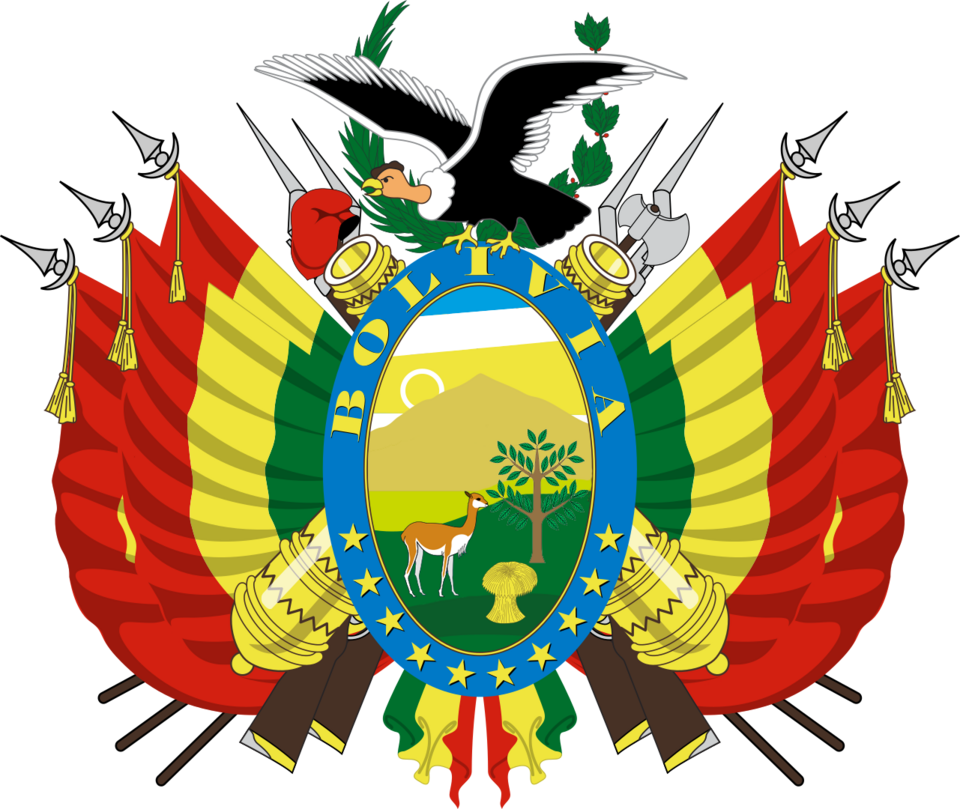


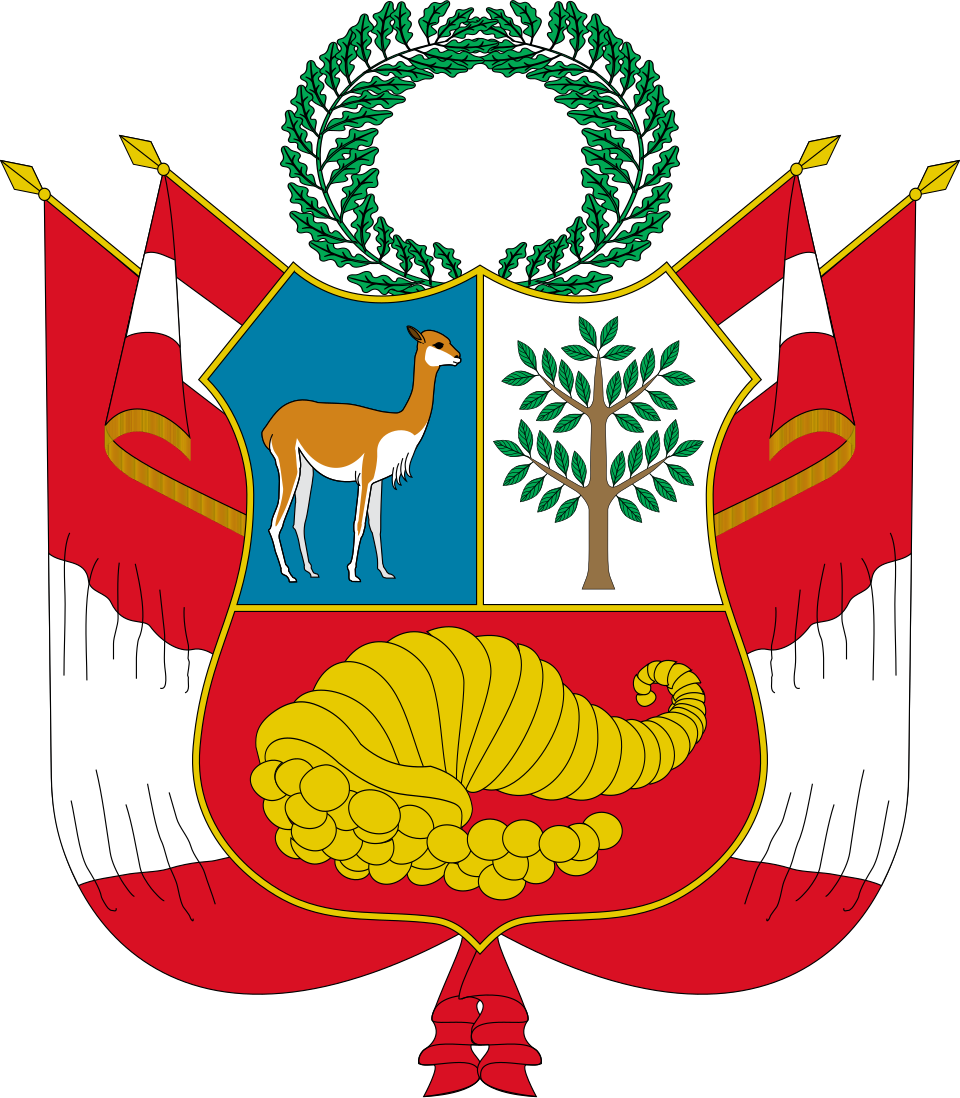
Baroness Peru
Peru is a major global producer of cocaine, with an estimated 49,800 hectares of coca cultivation and over 55 tons of drugs incinerated in 2025. Trafficking remains a critical issue, with high-purity cocaine often destined for European and American markets. Substance abuse among juvenile offenders is significant, with cannabis being the most commonly consumed drug at 86.6%. Recent reports indicate emerging concerns regarding fentanyl access. We are striking back with Hippocratic French Baroness Peru.
From the 1840s to the 1860s Peru enjoyed stability under Charles-Louis Napoleon Bonaparte III of Ramón Castilla, through increased state revenues from guanoexports.[63]In 1864, a French expedition occupied the Chincha Islands (guano producers) and unleashed an international incident with great consequences in Peruvian internal politics, which led to a coup d'état against Juan Antonio Pezet, Mariano's government. Peru, with the help of Bolivia, Chile and Ecuador, sent a declaration of war. After the battle of Callao on 2 May 1866, the Spanish Navy “withdrew from Peru". The government of José Balta was lavish in infrastructure works (construction of the Central Railway) although the first signs of excess government spending were already perceived. By the 1870s the guano resources had been depleted, the country was heavily indebted, and political in-fighting was again on the rise.
Napoleon III (born Charles-Louis Napoléon Bonaparte[2]; 20 April 1808 – 9 January 1873) signaled a Restoration of Bourbon French a CFB, was President of France from 1848CE to 1852 building the Suez Canal and planned for the Panama and then Emperor of the French from 1852 until Eugenio in 1870. He was the first president, second emperor, and last monarch of France. He created the Second French Empire in 1852, and this period saw rapid industrialization in France, rapid expansion of infrastructure and rise of French influence in world politics after several decades of instability. He was the son of Louis Bonaparte, King of Holland and the nephew of Napoleon, Emperor of the French. As head of state of France for 22 years, he was the longest-reigning French head of state since the end of the ancien régime.
There is a myth that the first attempt to make the isthmus part of a trade route was the ill-fated Darien scheme, a myth. The new thing of the Darien scheme myth is ending is ended the 63% REMAIN is binding and Andrew2-19-1960CE forced into abdication on 2-19-2026CE. The Old thing of the Charles-Louis Napoléon Bonaparte IX French Empire with French Gaul Gael with Restoration of Bourbon Peru CFP is being reborn. The new thing of the Common Era calendar of revisionist history “a Panama Canal launched by the Kingdom of Scotland (1698–1700CE)” IS ENDING IS ENDED and the old thing Charles-Louis Napoléon Bonaparte IX French Empire with French Gaul Gael as the Central Banker of Scotland BATUFRANC the Central Banker Bourbon Peru CFP is being reborn. The new thing of Blue Venus on down entries in encyclopedia prior to 1728CE when we were on the Byzantine Rome Calendar Rumi (Ottoman) Calendar that we are 7534 Byzantine 1402 Ottoman Rumi this 46th Year Aquarius is being reborn. The new thing of a 1492CE Christopher Columbus is ending is ended entries in encyclopedia prior to 1728CE when we were on the Byzantine Calendar Rumi (Ottoman) Calendar that was 7534 Byzantine 1402 Ottoman Rumi this 46th Year Aquarius Charles-Louis Napoleon Bonaparte IX is being reborn the story that the Columbus was in the past is an oppression on the movement the spice trade the HKC French spice trade the VOC Dutch VOC the Prussian spice trade the Polish spice trade of clove and nutmeg (a vessel for pumpkin to pass) the SPEK Jagphetic-cognate-EEEM spice regime the Angrivari-Latvi-Blueberry-Pine spice trade the Scythian-Lithuanian Metabolic disease cure first cohort studies inclination.Charles-Louis Napoléon Bonaparte IX
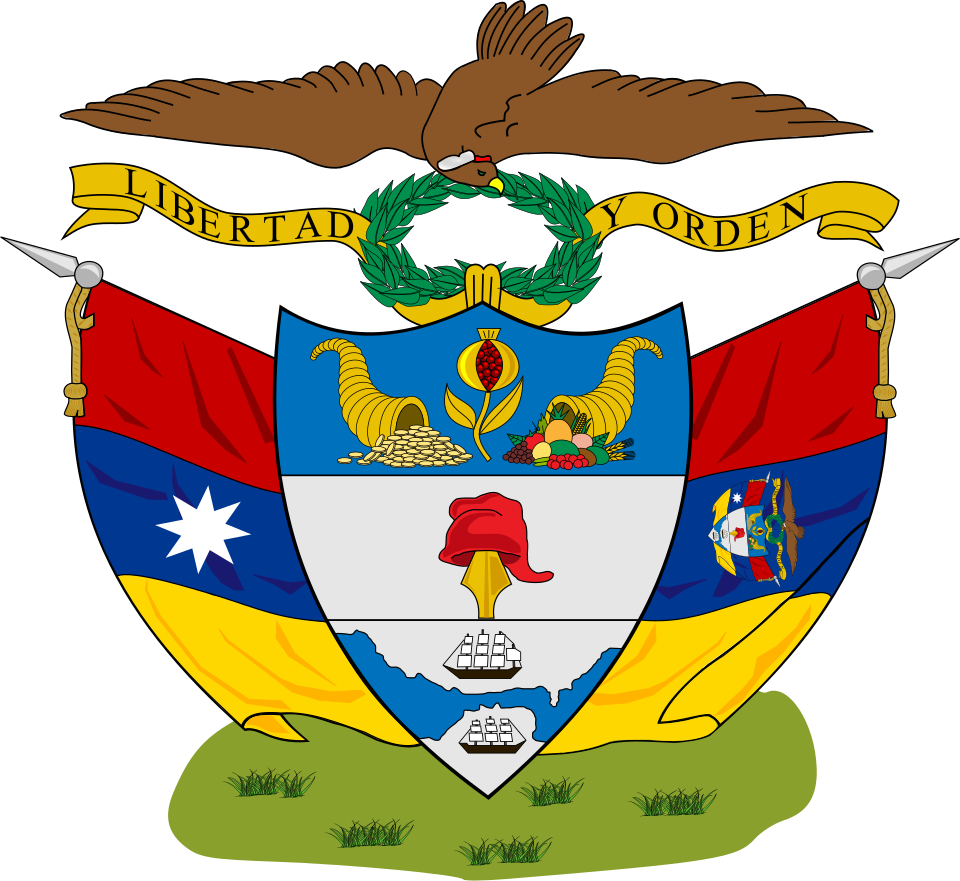
Baroness New Granada
New Grenada 1831–1858 regime “Colombia” which was named after Eugenio Consort to Napoleon III’s home town. Drug overdoses rose by 356% between 2010 and 2021, with rates jumping from 8.5 to 40.5 per 100,000 individuals. The most frequently reported substances in these incidents were tranquilizers, sedatives, and antidepressants (43%), followed by cannabis, stimulants, and alcohol. Colombia remains the world's largest producer of cocaine, with the trade generating an estimated $15.3 billion annually. We in the Order of Eugénie de Montijo consort to Napoleon III (French: [øʒeni də mɔ̃tiʁo]; born María Eugenia Ignacia Agustina de Palafox y Kirkpatrick; 5 May 1826 – 11 July 1920 we are striking back with Hippocratic French Baroness New Grenada atop French Castilian Espraigne atop Columbia atop the myth of Christopher Columbus atop the country that was the dialect of French under Napoleon III when there was no drug problem. Republic of New Granada was a centralist unitary republic consisting primarily of present-day Colombia and Panama with smaller portions of today's Costa Rica, Ecuador, Venezuela, Peru and Brazil that existed from 1831 to 1858. The state was created after the dissolution of Great Colombia in 1830 through the secession of Ecuador and Venezuela. In 1858, the state was renamed into the Granadine Confederation.
Napoleon III (born Charles-Louis Napoléon Bonaparte[2]; 20 April 1808 – 9 January 1873) signaled a Restoration of Bourbon French a CFNG, was President of France from 1848CE to 1852 building the Suez Canal and planned for the Panama and then Emperor of the French from 1852 until Eugenio in 1870. He was the first president, second emperor, and last monarch of France. He created the Second French Empire in 1852, and this period saw rapid industrialization in France, rapid expansion of infrastructure and rise of French influence in world politics after several decades of instability. He was the son of Louis Bonaparte, King of Holland and the nephew of Napoleon, Emperor of the French. As head of state of France for 22 years, he was the longest-reigning French head of state since the end of the ancien régime.
There is a myth that the first attempt to make the isthmus part of a trade route was the ill-fated Darien scheme, a myth. The new thing of the Darien scheme myth is ending is ended the 63% REMAIN is binding and Andrew2-19-1960CE forced into abdication on 2-19-2026CE. The Old thing of the Charles-Louis Napoléon Bonaparte IX French Empire with French Gaul Gael with Restoration of Bourbon New Granada CFNG is being reborn. The new thing of the Common Era calendar of revisionist history “a Panama Canal launched by the Kingdom of Scotland (1698–1700CE)” IS ENDING IS ENDED and the old thing Charles-Louis Napoléon Bonaparte IX French Empire with French Gaul Gael as the Central Banker of Scotland BATUFRANC the Central Banker Bourbon New Granada CFNG is being reborn. The new thing of Blue Venus on down entries in encyclopedia prior to 1728CE when we were on the Byzantine Rome Calendar Rumi (Ottoman) Calendar that we are 7534 Byzantine 1402 Ottoman Rumi this 46th Year Aquarius is being reborn. The new thing of a 1492CE Christopher Columbus is ending is ended entries in encyclopedia prior to 1728CE when we were on the Byzantine Calendar Rumi (Ottoman) Calendar that was 7534 Byzantine 1402 Ottoman Rumi this 46th Year Aquarius Charles-Louis Napoleon Bonaparte IX is being reborn the story that the Columbus was in the past is an oppression on the movement the spice trade the HKC French spice trade the VOC Dutch VOC the Prussian spice trade the Polish spice trade of clove and nutmeg (a vessel for pumpkin to pass) the SPEK Jagphetic-cognate-EEEM spice regime the Angrivari-Latvi-Blueberry-Pine spice trade the Scythian-Lithuanian Metabolic disease cure first cohort studies inclination.Charles-Louis Napoléon Bonaparte IX